The biggest shift in 2026 pool design is happening below the waterline. Homeowners are trading bright, swimming-pool blue for graphite, black pebble and deep sapphire interiors.
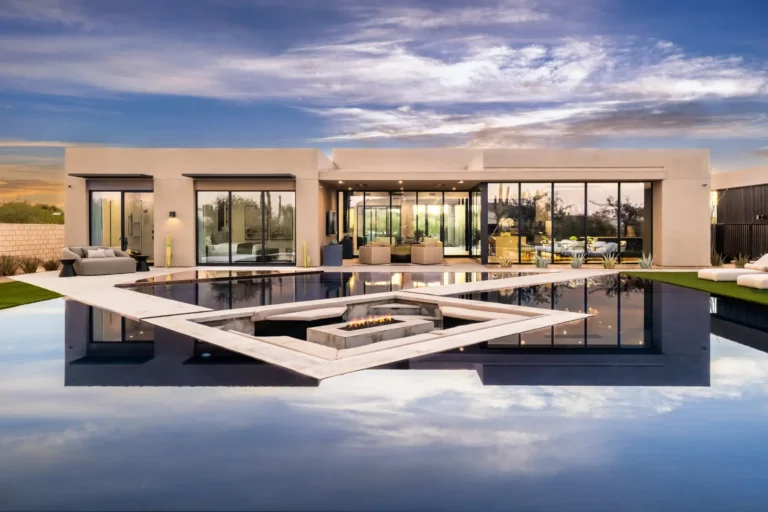
The reason is simple. A darker finish turns the pool from a recreational feature into a mood. The water reads like a reflecting pond by day and like polished stone after dark. It mirrors the sky, the architecture and the desert around it.
In this guide, we’ll walk you through the colors and materials leading the change. You’ll see how each one behaves in Arizona sun, how pebble, glass and plaster compare, and how to build a whole atmosphere around a darker pool.
Color Psychology in Pool Design: What Dark Water Says
Color shapes how a space feels before anyone dips a toe in. That’s why the interior finish is one of the most emotional choices in pool design.
Classic light blue signals energy and play. It gives resort vacation vibes or lends its way to a long summer afternoon with friends. There’s nothing wrong with that, as it still suits family pools built for activity.
Darker interiors send a different message. Deep tones read as calm, private and grown-up. They slow the eye down and invite you to sit and admire, not just swim.
A few things happen when the finish goes dark:
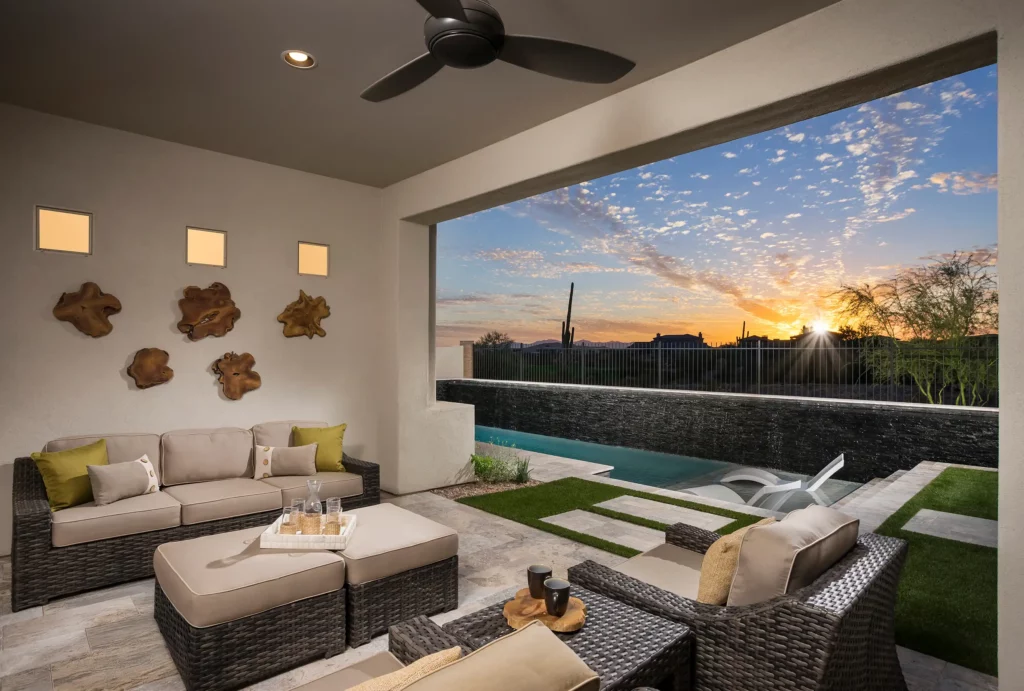
- The water becomes a mirror. Dark surfaces reflect the sky, palm silhouettes, and the home’s architecture far better than pale plaster does.
- The pool looks deeper. Darker tones add visual depth, which makes even a modest pool feel substantial.
- The color comes alive. In the water, “black” rarely looks black. Depending on depth and light, it reads as deep teal, lagoon green or midnight blue.
- Evenings take center stage. Under lighting, a dark pool glows like a jewel box instead of a lit-up rectangle.
Choose dark, and the pool starts setting the mood for the entire yard.
The 2026 Palette: Graphite, Black Pebble and Deep Sapphire
Three tones are leading the move away from traditional blue. Each one creates a different water color, so it helps to know what you’re really choosing.
Graphite
Graphite is a charcoal gray with a soft, matte character. In the water, it reads as a cool slate blue that feels calm and architectural. It pairs beautifully with concrete, porcelain pavers and modern stucco. If you love the dark look but want something a little gentler than black, graphite is the natural starting point.
Black Pebble
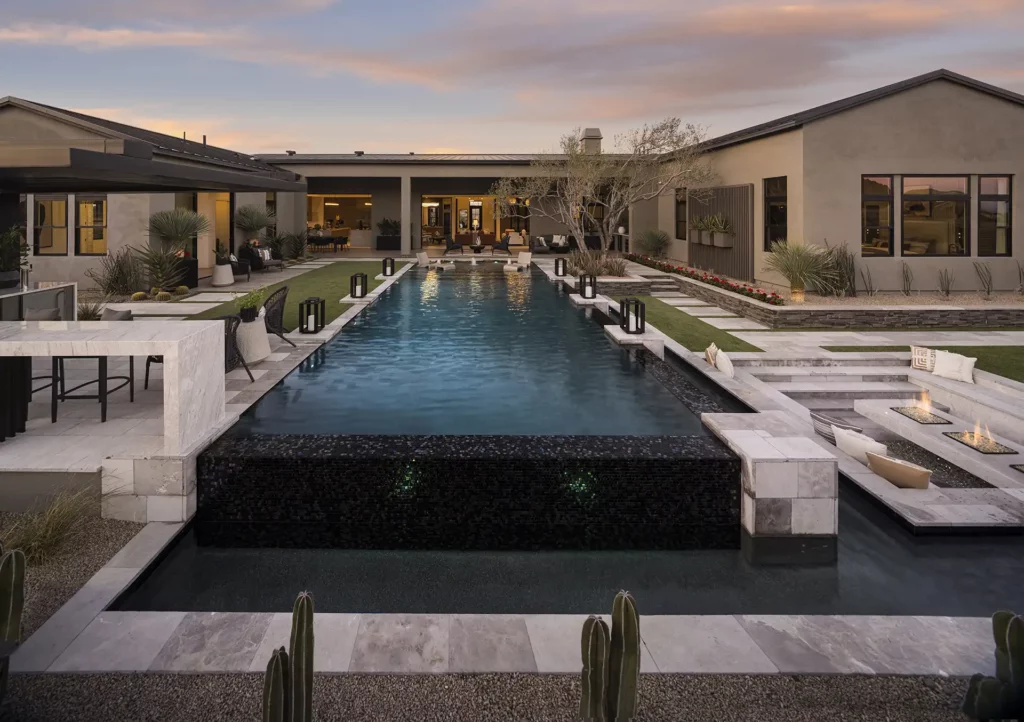
Black pebble is the boldest choice and the most reflective. Once filled, it rarely looks truly black. Shallow areas glow deep teal, while the deep end settles into midnight. On a still evening, the surface becomes an almost perfect mirror for the sky and the home.
Deep Sapphire
Deep sapphire keeps a clear link to blue, just richer and moodier. Think of the color of the ocean rather than a hotel pool. It suits homeowners who want drama without giving up that classic “swimming pool” feeling.
Multi-Tone Blends That Shift With the Light
The most interesting finishes in 2026 aren’t a single color at all. Designers are blending dark aggregate with flecks of blue, silver, abalone shell or iridescent glass beads.
The result changes throughout the day. Morning light picks out cool silver tones. Midday sun brings the blues forward. At golden hour, warmer flecks catch the low sun. After dark, pool lighting pulls a completely different shimmer from the same surface.
One helpful tip: always look at a finish sample underwater and in direct sun before you decide. A chip in your hand can look very different from the same color under four feet of water.
Glass Tile Mosaics: Iridescence Against a Dark Ground
If a dark interior is the velvet, glass tile is the jewelry. Against a deep background, iridescent glass looks brighter and more vivid than it ever could next to pale plaster.
Many glass tiles have a pearly, iridescent face that shifts from blue to green to bronze as you move around the pool. Set into a dark finish, that sheen seems to float.
Here’s where glass tile can make the biggest impact:
- The waterline. A band of iridescent tile frames the pool and catches every ripple of sunlight.
- Steps and benches. Tiled edges add a glimmer and help guests see the changes in depth.
- Spillways and water walls. Dark glass on a vertical surface turns falling water into a sheet of light.
- The full interior. For the most dramatic result, the whole pool can be clad in glass mosaic, often in a gradient from light to dark.
Glass tile is also one of the most colorfast materials you can put in a pool. The color is fused into the glass, so it holds up well under strong sun.
Pebble vs. Glass vs. Plaster: Choosing the Right Dark Finish
But color is only half the decision. The material underneath determines how that color looks, feels and lasts. Here’s how the three main options compare for a darker pool.
Pebble is the favorite for dark interiors, and for good reason. Small stones bound in cement hide minor wear well and keep their color longer than plaster. Polished and smaller-aggregate pebble blends now feel far softer than the rough finishes many people remember.
Glass tile delivers the most drama and the longest life. It’s often used as an accent with pebble, but a fully tiled interior is the ultimate statement.
Plaster offers the smoothest feel. Dark plaster colors, though, are more likely to show uneven tones over time. In Arizona, we tend to guide clients toward pebble or glass when they want a dark look that stays rich.
How Dark Finishes Hold Up in the Arizona Sun
Arizona is one of the toughest places in the country for a pool finish. Intense UV, triple-digit summers and hard water can all test a surface year after year. The good news is that with a little planning, a well-chosen dark finish can handle these conditions beautifully.
UV and fading. Sun slowly breaks down pigments, and dark colors show that change more than light ones. Pebble and glass resist fading far better than colored plaster, which is why they lead in dark pool design.
Water temperature. Dark interiors absorb more sunlight, so the water warms faster. Many homeowners love this in spring and fall, when it stretches the swim season. In peak summer, shade structures, water features and evening swims keep things comfortable.
Hard water and scale. Valley water is high in calcium. On a dark surface, white scale and waterline marks are easier to spot. Balanced water chemistry and regular brushing keep a dark finish looking crisp.
Dust and debris. Desert dust settles on any pool. It simply shows more on a dark floor. A good automatic cleaner and routine service can make this a non-issue.
This is where a design-build-maintain team pays off. The people who chose your finish also understand how to care for it. Our ongoing maintenance team keeps dark pools looking the way they did on day one.
Dark Pool Design in Practice: Three Creative Environments Projects
Seeing a dark finish in a real yard tells you more than any swatch. These three projects show how differently the look can play out.
The Sunburst
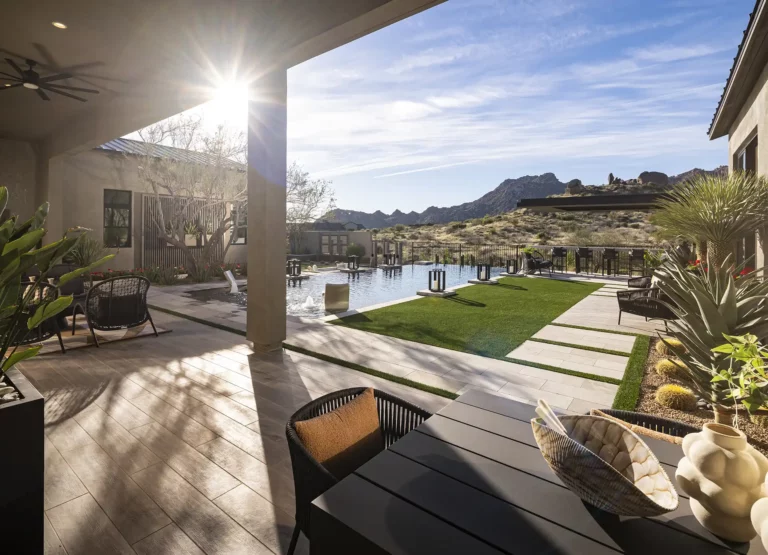
In Scottsdale, the nationally acclaimed The Sunburst features a sun-inspired pool with geometric lines, an infinity edge, perimeter overflow, and a Baja shelf. Complementing the design are desert planting, sculptural boulders, a modern fire pit, and thoughtful uplighting that bring depth and warmth to the landscape.
This project won multiple notable national awards including the Gold Nugget Nationals Home of the Year 2024, MAME Awards Home of the Year 2024, NAHB The Nationals Best Landscape of a Model Gold Award 2024, and Best Indoor/Outdoor Lifestyle for a Home 2024.
The Blackstone
At The Blackstone, glass tile accents the pool’s clean edges, and a deep-toned tiled water wall anchors the courtyard. It shows how dark tile can bring drama even when the main pool stays bright.
The Slate
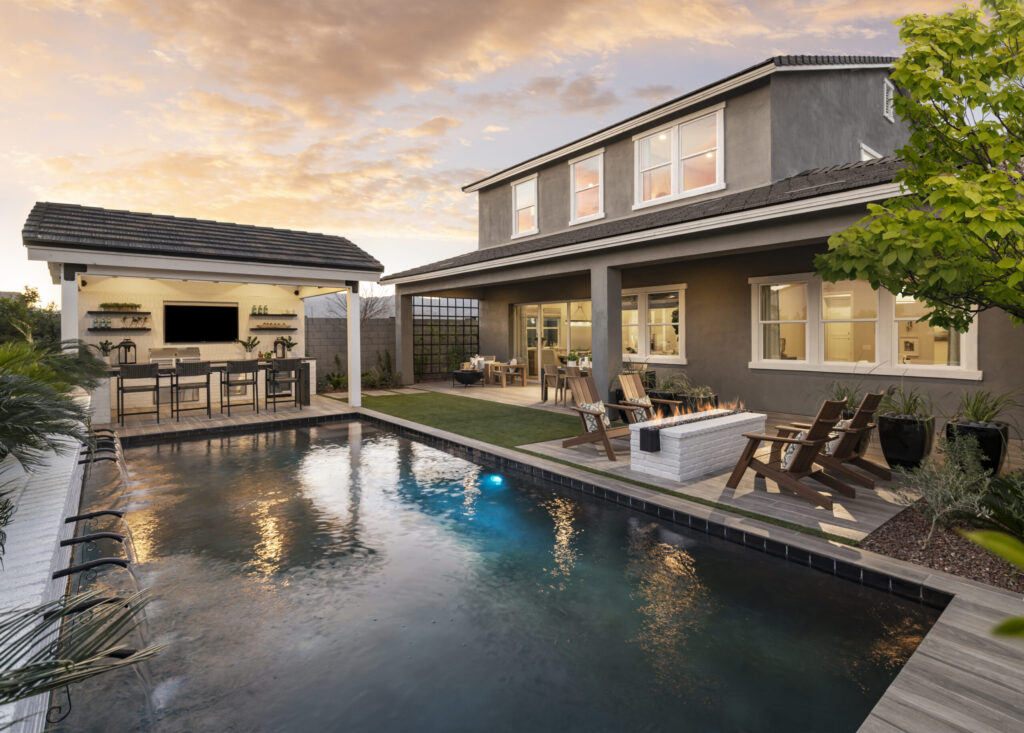
The Slate leans towards industrial. Its black slate-toned pool pairs with a metal fire wall, concrete and pebbled planting. At dusk, the warm glow of the cabana and fire spills across the dark water. It’s a great example of graphite and black working with warm materials rather than against them.
Designing the Mood Around a Dark Pool
A dark finish sets the tone. The surrounding design decides whether it feels serene or sultry. Here’s how to build the full atmosphere.
Light it like a gallery. Dark water rewards thoughtful lighting more than any other finish. Warm white LEDs inside the pool give a soft, glowing look. Color-changing systems let you shift the mood for a party. Uplighting nearby trees and walls adds reflections that dance across the surface.
Bring in fire. Flame and dark water are a natural pair. A fire wall, a linear fire feature or fire bowls along the edge will reflect in the water and double the glow.
Choose a calm material palette. Light travertine or warm porcelain decking keeps a dark pool from feeling heavy. For a bolder, monochrome look, charcoal pavers and black metal work beautifully. Either way, limit the palette so the water stays the star.
Plant for silhouette. Sculptural agaves, palms and desert trees look striking against dark water, especially when uplit. Keep planting simple and architectural.
Add movement and sound. Scuppers, sheer descents and perimeter overflow edges break the mirror into ripples and add a soothing soundtrack.
You can explore more ideas in our fire and water features and custom pools and spas pages.
Find the Dark Finish for You
Choosing a pool finish is easier with someone who has seen how every color behaves in the desert sun. For more than 75 years, Creative Environments has guided Arizona homeowners through decisions like this one.
We’ll bring real finish samples to your yard, show you the result in 3D and help you pair the interior with lighting, stone and fire. Browse our project gallery for inspiration, or book a design consultation and let’s start shaping the mood of your backyard.