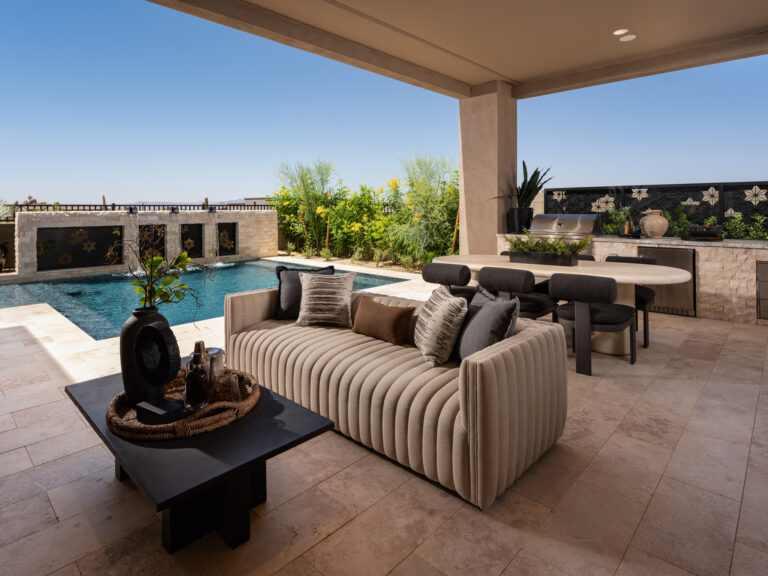
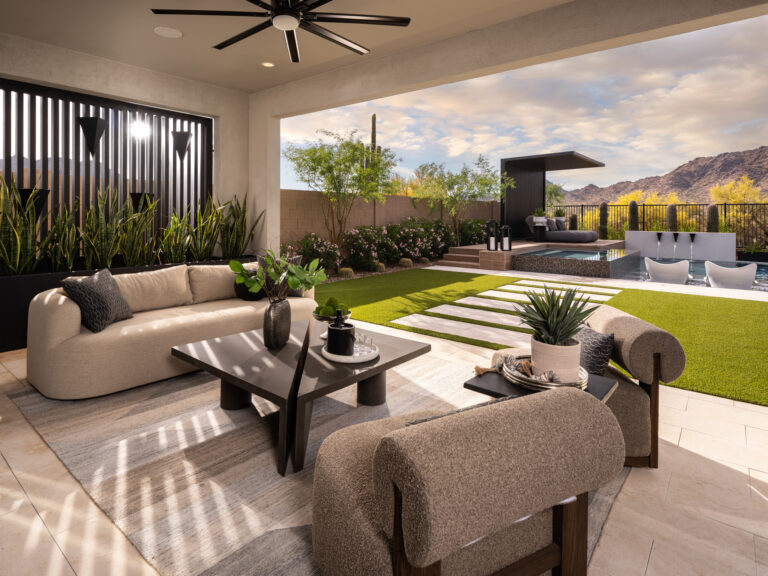
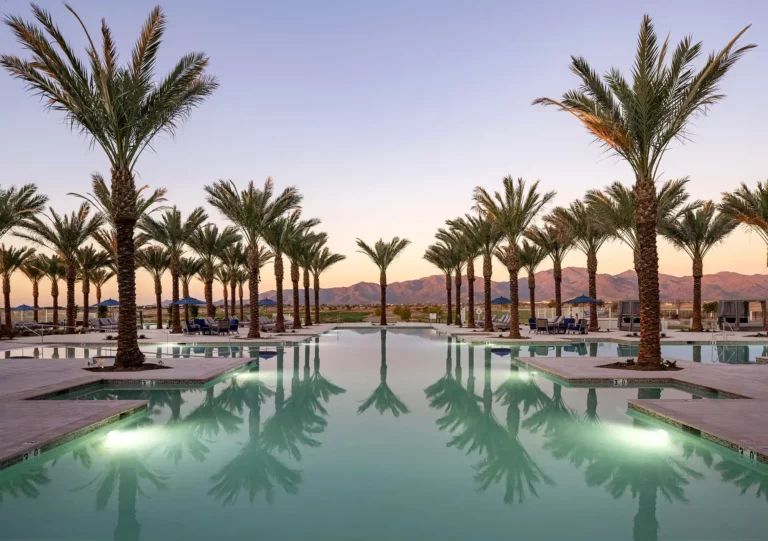
It’s hard to deny that luxury outdoor spaces can act as the pathway to enjoying the outdoors once the sun has set.
After all, summer evenings in Tempe are when the backyard really becomes enjoyable. The sun drops, the temperature follows, and the patio that felt like a furnace at 3 p.m. turns into the best room in the house by 8 p.m. But here’s what most Arizona homeowners notice around that same hour: the yard that looked incredible in daylight has vanished. The pool is a dark shape. The palms are silhouettes. The fire pit is the only thing anyone can actually see.
That gap between how a yard looks at noon and how it looks after dark is the one most landscape projects miss. And in 2026, the fix isn’t brighter lights. It’s layered ones.
Outdoor lighting has shifted from a safety add-on to a design layer of its own. Soft, warm, programmable, and often solar-assisted, today’s systems are built to create ambiance rather than just illumination. Done right, layered lighting turns a good yard into one of the most inviting luxury outdoor spaces on the street, and it adds hours of usable time to every day.
Here’s how the layers work, what to install, and how to plan a system that actually gets used.
Why Lighting Is the Missing Layer in Most Landscape Design
Most yards get lit the same way. A porch light near the back door, a couple of floodlights on the eaves, maybe a solar stake or two along the walkway. It’s functional. It’s also flat, harsh, and forgettable.
The problem is that lighting usually gets treated as the last item on the punch list rather than a design decision made on day one. When it’s planned late, fixtures land wherever wire can reach, not where the yard needs light. When it’s planned early, lighting becomes a layer of the landscape design itself, shaping how the space feels after sunset the same way plants and hardscape shape how it feels during the day.
Landscape design services that build lighting into the plan from the start produce yards with depth, texture, and rhythm at night. The difference is real, and it shows up in two ways homeowners care about: how much the yard actually gets used, and how much value it adds to the property. A backyard that looks stunning at 9 p.m. is a backyard people invite friends to.
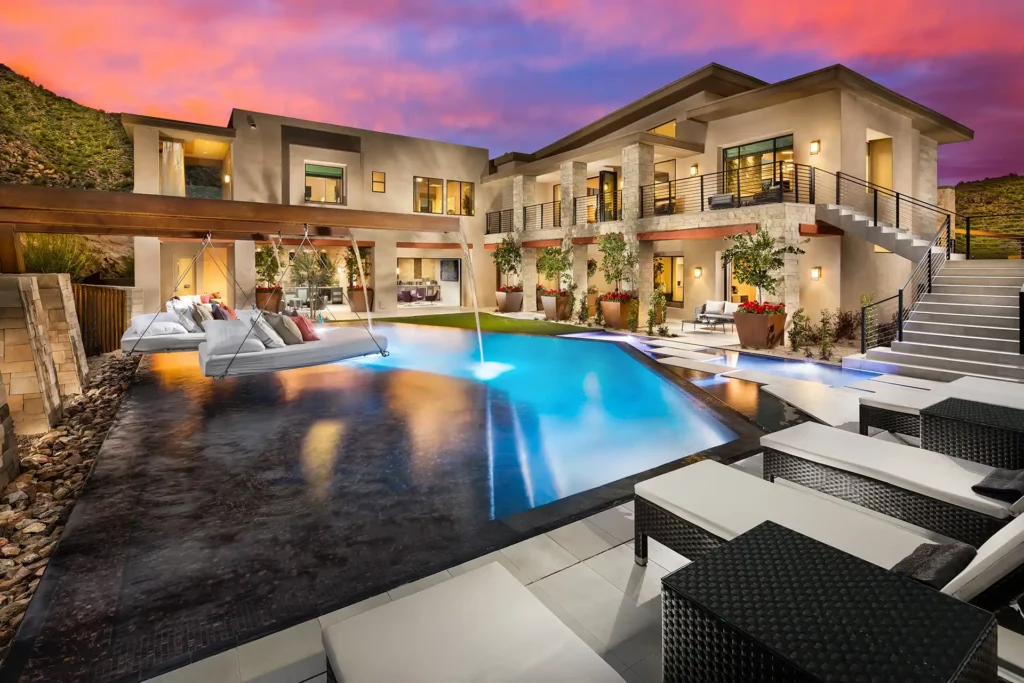
The Five Layers of Outdoor Lighting That Transform a Yard
A well-designed lighting plan isn’t one type of fixture repeated. It’s five layers working together, each doing a different job. Skip a layer and the yard feels incomplete, even if you can’t quite say why.
Path Lighting for Safety and Rhythm
Path lighting is the base layer. Low bollards, in-ground fixtures, or short mushroom-style lights placed along walkways, pool decks, and steps. Spacing matters more than fixture count. Lights placed every six to eight feet create a steady visual rhythm that guides the eye through the yard, while lights crammed too close together read as runway strips.
Stick to warm color temperatures in the 2700K to 3000K range. Anything cooler reads as commercial and kills the mood instantly. Path lighting is the layer that makes the yard feel safe to walk through after a few drinks, and it’s the foundation everything else builds on.
Uplighting to Show Off Trees, Walls, and Architecture
This is the layer that adds drama. Warm uplights tucked into planter beds and aimed up at palm trunks, mature saguaros, stucco walls, stone veneer, and architectural features. Uplighting turns a flat yard into a dimensional one by giving the eye something to travel up and across.
There are two techniques worth knowing. Grazing places the light close to a textured surface (like stone or bark) to emphasize the texture with shadow. Washing places it farther away for a smoother, more even glow. Most Tempe yards benefit from a mix: graze the stone walls, wash the palms, and let the contrast do the work.
Underwater Pool LEDs for Glow and Movement
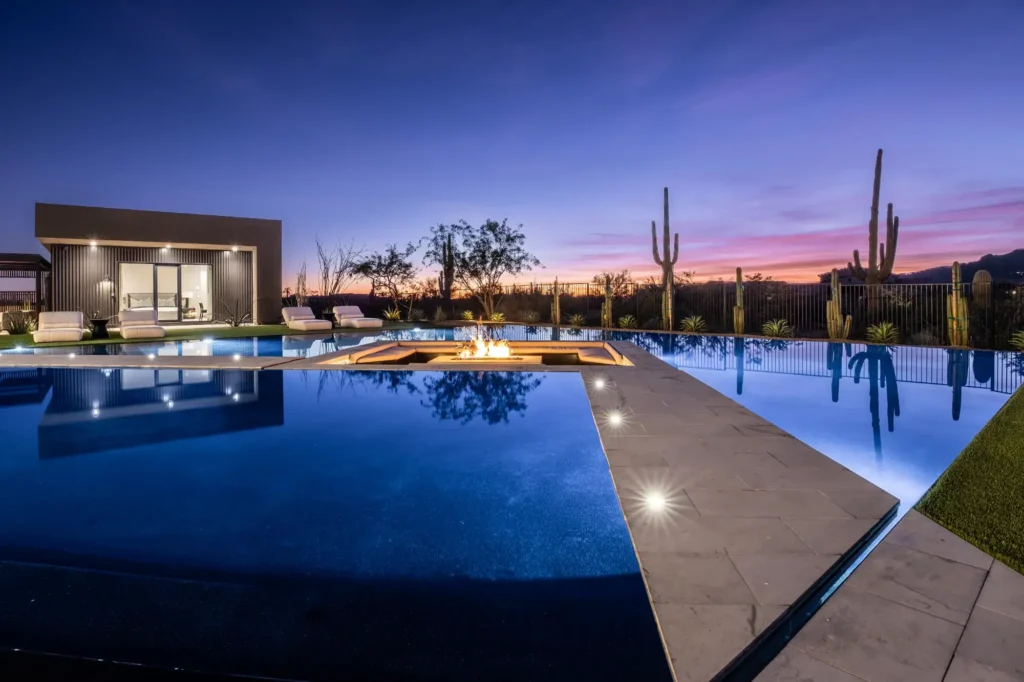
If you have a pool, it becomes the anchor of the yard after dark. Color-changing LED pool lights, spa lights, and water feature lights turn what was a dark rectangle into the visual centerpiece of the entire space.
Programmable systems let you set scenes for different moods. Cool blue and white for a calm weeknight. Warmer tones for entertaining. Slow-shifting color for kids’ pool nights. The best pool lighting is the kind you notice without noticing, a steady glow that pulls people toward the water.
Fire Feature Glow as a Natural Focal Point
Fire pits, fire bowls, and linear gas fireplaces do something LEDs can’t. Firelight flickers, moves, and radiates warmth that reads as instinctively welcoming. It’s the reason every good outdoor gathering ends up around the fire feature by 10 p.m.
Fire pairs beautifully with cooler underwater lighting. The contrast between warm flame and cool pool glow gives the yard two natural gathering zones and a sense of depth between them. In a Phoenix-area yard used year-round, a fire feature also stretches usability into the winter months when the pool sits idle.
Accent and String Lighting for Ambiance
The final layer is the one guests remember. Bistro string lights strung over the patio or pergola. Wall sconces flanking the back door. Step lights tucked into stair treads. Small in-planter accents highlighting a sculpture or fountain.
This is the layer that signals hospitality. It’s the visual cue that says the yard was designed for people, not just for plants. String lights in particular do a disproportionate amount of work for their cost, giving a defined “ceiling” to the patio and making the space feel like an outdoor room rather than an open expanse.
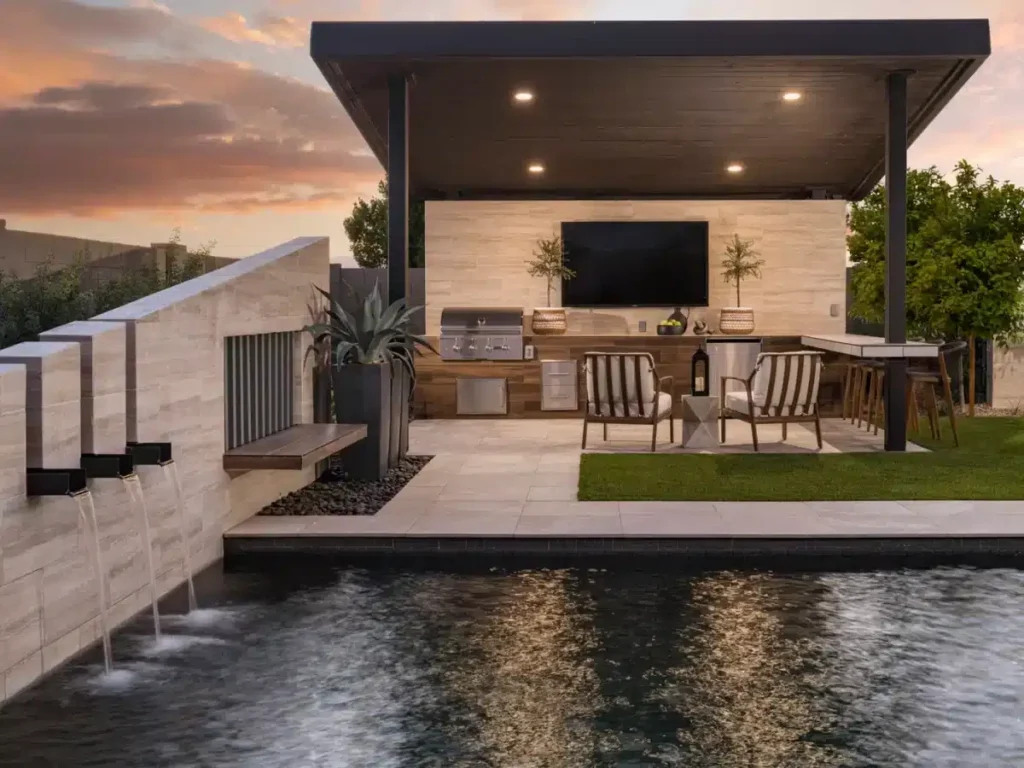
Smart Controls and Solar-Powered Options Worth Considering in 2026
Two upgrades have changed what’s possible in the last few years, and both are worth building into any new lighting plan.
Smart control systems let homeowners run every layer from a phone. Set scenes for dinner, entertaining, or wind-down. Schedule the whole yard to fade on at sunset and off at 11 p.m. Dim individual zones for movie nights on the patio. Voice control integrates with the usual home systems, so “turn on the backyard” becomes a real command that actually does what it says.
Solar-powered fixtures have quietly gotten good. If the solar path lights you tried five years ago felt dim and died in six months, the current generation is a different product. Modern lithium batteries, better panels, and warm-white LEDs mean solar accent and path lights are genuinely viable for areas where trenching wire is impractical, especially in Arizona sun. They pair well with eco-friendly irrigation lighting setups where the same controller manages both drip zones and low-voltage lights on a shared sunset-based schedule, cutting energy use and simplifying the system.
The result is a yard that runs itself. No timer boxes to reset after a power flicker, no walking outside to flip a switch.
How Lighting Extends Your Outdoor Living Space Ideas Into the Evening
The practical payoff is time. A properly lit yard doesn’t just look good at night. It gets used at night.
Think about how a Tempe homeowner’s day actually flows. Morning coffee on the patio before the heat kicks in. Kids in the pool after school. And then the part that only works with the right lighting: late dinners outside in July when 10 p.m. is finally comfortable. Weekend gatherings that run past sunset around the fire feature. Quiet weeknights when the backyard becomes a second living room after work, glowing softly whether anyone’s using the pool or not.
That’s the shift worth understanding. Outdoor living space ideas that look great in photos are common. Ones that actually get used every night of the week require lighting planned as carefully as the pool, the patio, and the plants.
Working With a Landscape Designer on Your Lighting Plan
A real lighting design process looks different from picking fixtures off a shelf. It starts with a site walk at dusk to see how light already moves through the yard, where the dark spots are, and what features deserve attention. From there: fixture selection based on the architecture and planting, transformer sizing so the system runs cool and lasts, wire routing planned around future landscape changes, and smart-control programming set up around how the homeowners actually live.
Retrofitting lighting into a finished yard is always possible, but it costs more and delivers less than planning it in from the start. Wire has to be trenched through established plantings. Fixtures land where access allows rather than where the design wants them. The layers end up compromised.
Creative Environments handles landscape design, lighting installation, and smart-control setup for homeowners across Tempe, Scottsdale, and the broader Phoenix metro. Every project is built as a complete outdoor environment, with lighting treated as a design layer from the first sketch, not a line item at the end.
Luxury Outdoor Spaces: Ready to See Your Space After Dark?
If your backyard disappears at sunset, the fix isn’t more lights. It’s the right ones, in the right layers, tuned to the way you actually use the space. Request a design consultation with Creative Environments and get a lighting plan built around your yard, your evenings, and how you want the space to feel.