There is one evening every October when you open the patio door and simply leave it open. The air has gone soft. The pavers have cooled. Someone says, let’s eat outside tonight.
That evening is the start of some of the best six months in the Valley.
It’s also the moment most homeowners notice something. While the backyard looks beautiful, it just doesn’t work.
The seating is scattered.
The grill is stranded.
Guests end up standing in the kitchen anyway.
A well designed outdoor entertainment area solves that, and not with more furniture. It solves it with better planning and a more refined, experienced approach. From creating dedicated spaces to building the outdoor kitchen of your dreams, let’s take a closer look at how you can entertain your guests this fall!
Why Phoenix Outdoor Season Runs October Through April
Most of the country closes the patio in the fall. But in Phoenix, we open ours.
From October into April, Valley evenings settle into that rare range where nobody asks to go inside. Sixties and seventies after sunset. Dry air. Long golden light before dinner.
Then look at what fills the calendar. Football Sundays. Thanksgiving with family in town. Holiday parties. New Year’s Eve. Visitors in March. Brunch in the backyard come spring.
That is six months of steady use, not six good weekends. It’s why an outdoor entertaining area earns its keep here in a way it never could in a colder climate. Your backyard is not a seasonal amenity. For half the year, it is your favorite room in the house.
Start With Zones, Not Furniture
Most backyards fall short as gathering spaces for one reason. They were furnished, not designed.
A patio set goes down on the slab. A grill lands near the door. A fire bowl arrives later, wherever there is room. Each piece is fine on its own. Together they leave guests with nowhere to land.
Strong outdoor entertainment areas are planned around three zones.
The Three Zones Every Outdoor Entertainment Area Needs
1. Gathering
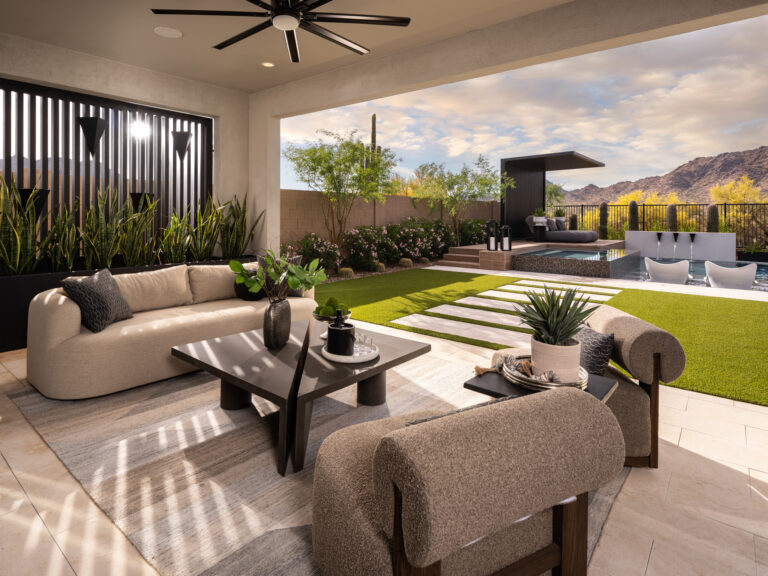
Soft seating arranged in a circle, anchored by warmth. This is where the evening slows down.
2. Dining
A table with shade above it and light over it, within easy reach of food.
3. Prep
The grill, the counter, the ice, the drinks. Everything the host touches.
Each zone should feel like its own room with a clear edge. A change in paving. A seat wall. A shade structure overhead. A planting bed along one side. Guests read those edges without ever thinking about them.
Then Design the Path Between Them
Movement is the part people forget. Leave 36 to 42 inches of clear walking space around seating. Keep the route from the indoor kitchen to the grill to the table direct. Nobody should have to cut through a conversation to reach the ice.
Get the flow right and the space feels effortless. Get it wrong and no amount of beautiful furniture will rescue it.
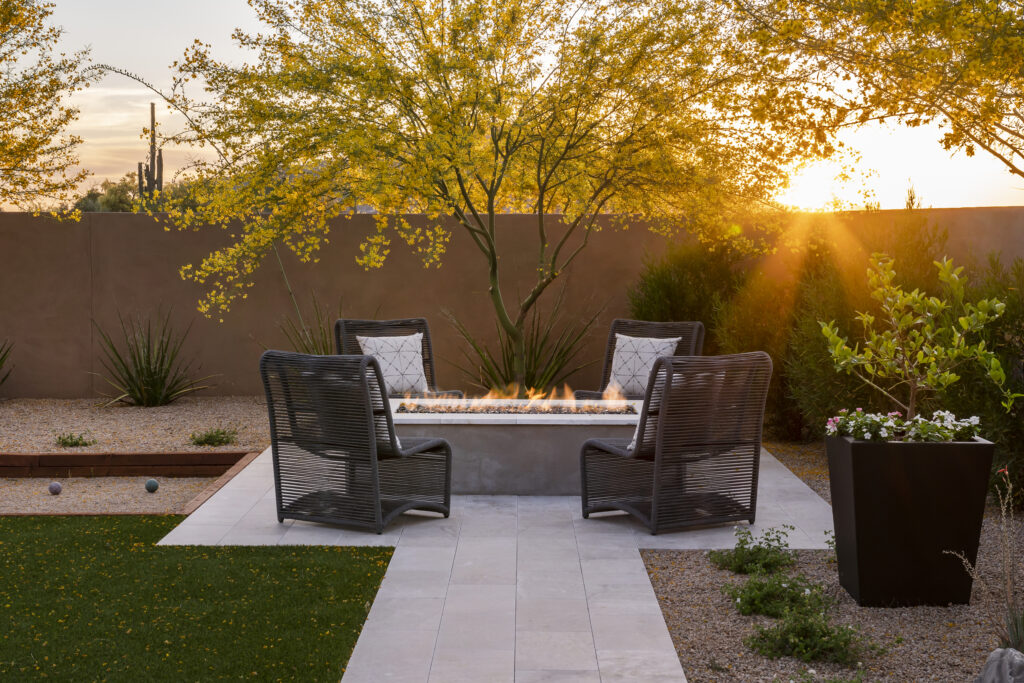
Fire Features That Pull People Together
Fire is the reason people stay.
Once the sun drops behind the mountains, a Phoenix evening often cools quickly. A well placed fire feature does two things at once. It stretches the comfortable hours well past dinner. And it gives the gathering zone a center, the way a fireplace does indoors.
Choosing the Right One
- Fire Pit: Warm, communal, everyone facing one another. The best choice for larger groups and easy conversation.
- Fireplace: Vertical presence that anchors a wall, blocks the evening breeze, and creates a sense of enclosure.
- Fire Table: Doubles as a surface for drinks. Beautiful in smaller yards, courtyards, and side patios.
Explore the possibilities in fire and water features, where flame and water often work best together.
Getting the Details Right
Size the seating radius before you size the flame. Too far away and the warmth is purely decorative. Too close and nobody stays seated.
Gas gives you instant on and off, which matters on a Tuesday. Wood gives you the crackle and the scent. Many homeowners choose gas for the main feature, then add a wood burning element somewhere quieter.
Built in seat walls around a fire pit are worth every dollar. They seat more people, they never blow over, and they read as architecture rather than furniture.
Shade and Shelter for Fall Dining
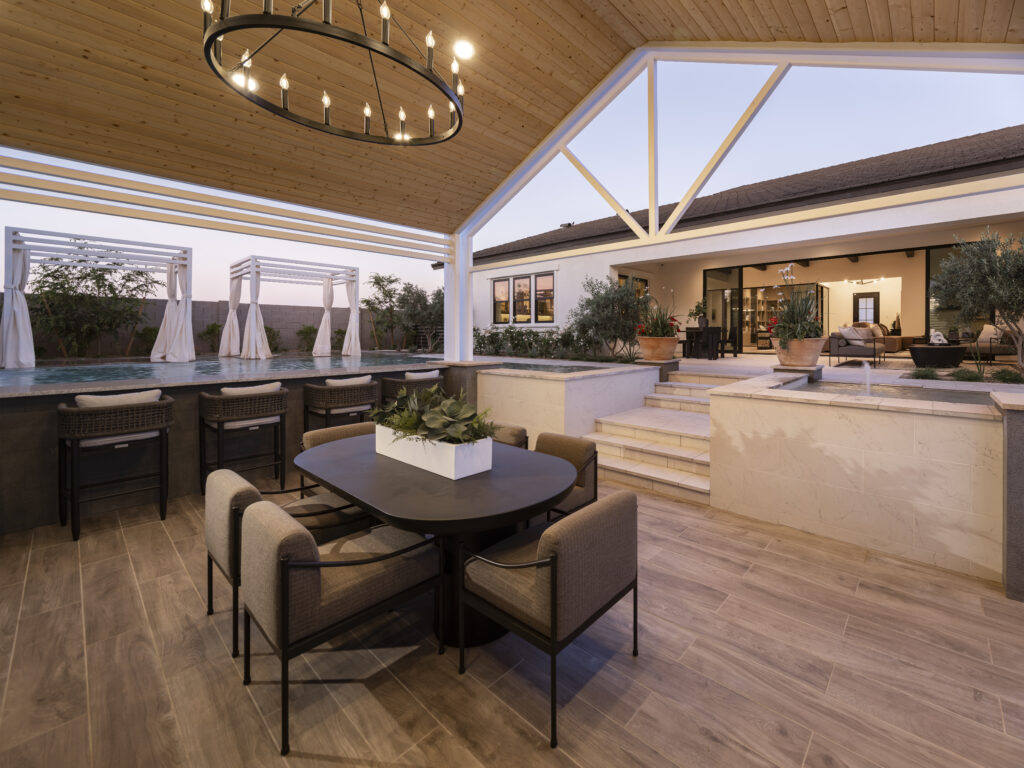
The October sun sits low. By five o’clock it comes in sideways, right across the dinner table. Shade is not only a summer concern here.
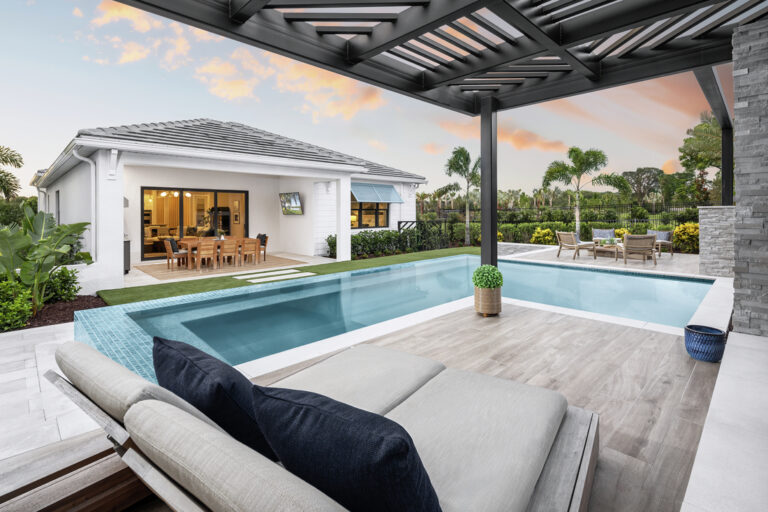
Overhead structure solves it, and does a great deal more. Attached patio covers extend the roofline of the home. Freestanding ramadas and cabanas create a destination out in the yard. Pergolas with adjustable louvers let you choose your light hour by hour.
A roof also gives you somewhere to put things. Fans for the warm weeks. Radiant heaters for January. Recessed lighting. Speakers. Each one disappears into the structure instead of cluttering your outdoor entertainment area.
This is where luxury patios separate themselves from ordinary ones. The materials belong to the home rather than sitting beside it. Matching stone. Stained timber or fabricated steel. Real detail overhead where people look up.
See how it comes together with the intentional addition of structures such as pergolas, cabanas, and shade structures.
One practical note: many Valley communities require design review for permanent structures and features. Build that step into your timeline early, rather than late.
An Outdoor Kitchen That Keeps You in the Party
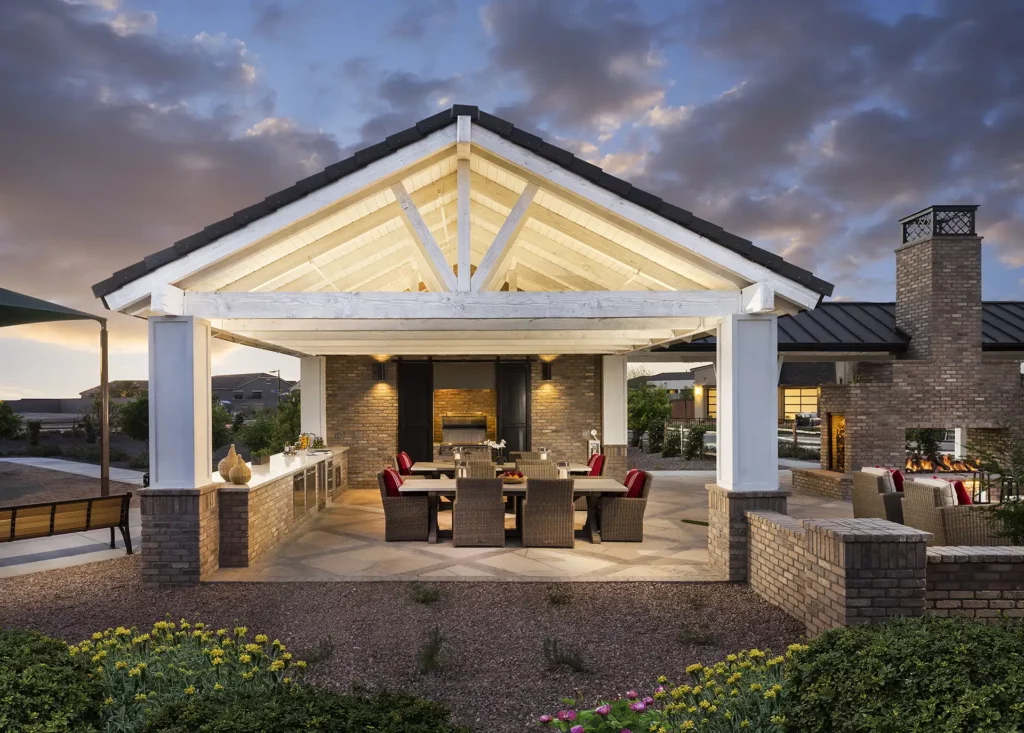
There is a familiar scene at every gathering. Everyone is outside laughing. The host is inside, alone, plating.
An outdoor kitchen puts an end to that.
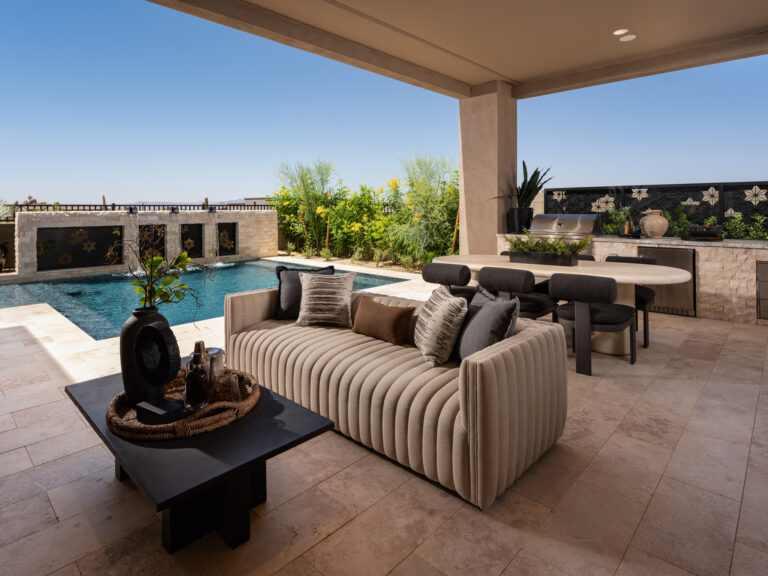
Start with the working core. A grill, a generous counter run, refrigeration, and a sink. Then add what suits the way you actually host. A pizza oven for family nights. A side burner for sauces. A beverage center so nobody opens your indoor refrigerator.
The single most valuable addition is bar seating. Set three or four stools across from the grill and the cook becomes part of the conversation. That one detail changes the entire evening.
Two elements get underbuilt more than any others. Counter landing space on both sides of the grill, and closed storage for tools, linens, and serving pieces. Plan generously for both.
Lighting That Takes Over After Sunset
Lighting is what carries a space from six o’clock to eleven.
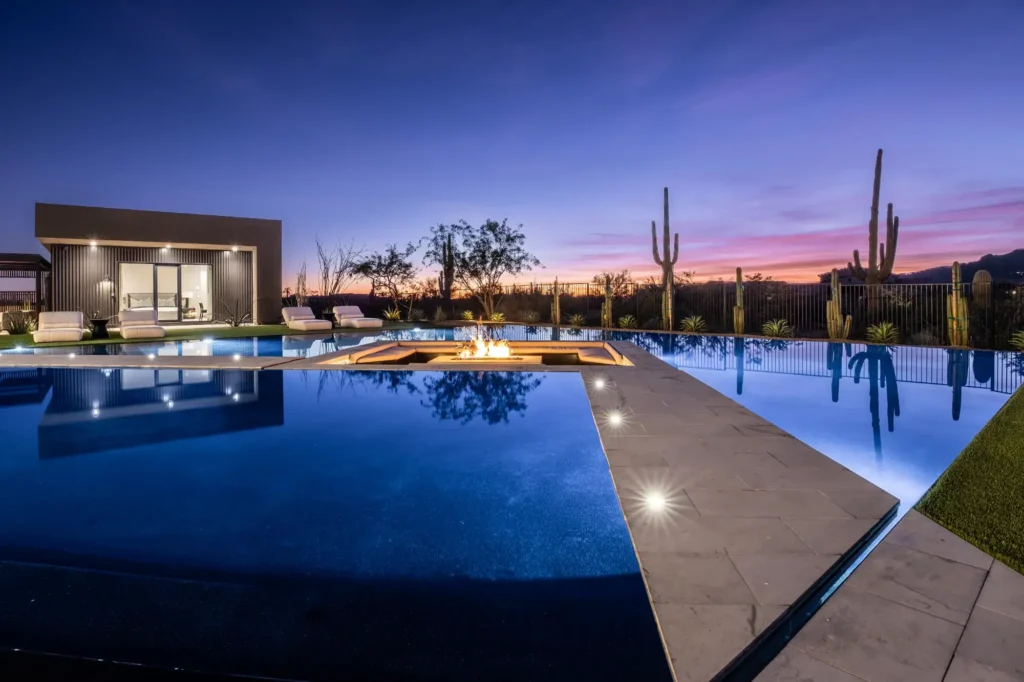
Layer it in three parts. Task lighting where you cook and pour. Path lighting so guests move safely between zones. Accent lighting on trees, stone, and water to give the yard depth after dark.
Then get the color right. Stay warm, in the 2700K range. Cool white light can unfortunately make a beautiful yard look like a parking lot.
Put each layer on its own zone and dimmer. Bright and lively during dinner. Low and quiet for the last hour by the fire. One space, two completely different evenings. Our approach to irrigation and lighting is built around that kind of control.
The Details Guests Remember
Structure makes an outdoor entertainment area work. Details make it memorable.
- Heaters for the coldest weeks of January
- Audio zoned so music sits beneath conversation, never above it
- Privacy planting or a water feature to soften street noise
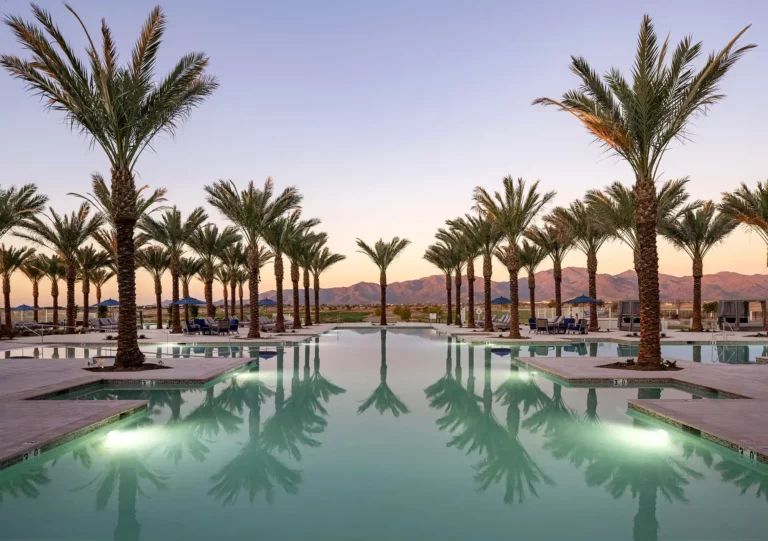
- A heated pool or spa, which turns a cool night into the reason people came
- Weather ready furnishings, outdoor rugs, and layered textiles
None of these is dramatic on its own. Together they are what people mean when they say a backyard feels finished.
Why Fall Is the Right Time to Begin
Design takes time. So do approvals, material selection, and construction. A custom outdoor entertainment area is never a weekend project, and the finest ones never pretend to be.
Starting the conversation now is what puts you in the space for the holidays or early spring. Waiting until March means watching another season pass from the kitchen window.
If you have been picturing it for a while, this is the season to draw it.
Frequently Asked Questions: Planning Your Outdoor Entertainment Area
What does an outdoor entertainment area cost in Phoenix?
Cost follows scope. A fire feature and seating area sits at one end. A covered patio with a full outdoor kitchen and lighting sits at the other. Many homeowners design the whole space at once and build it in phases. That keeps the plan cohesive while spreading the investment.
How long does a design and build project take?
It depends on the size and complexity of your future outdoor entertainment. Design, community approvals, permitting, material lead times, and construction each take their own share of the calendar. Beginning in late summer or early fall is what puts most homeowners in their space by the holidays or spring.
Do I need approval for a fire feature or shade structure?
Often, yes. Many Valley communities review permanent structures, walls, and features before work begins, and gas, electrical, and structural work typically require permits. Our team handles this process as part of the build.
When is the best time to start an outdoor living project in Arizona?
Late summer and early fall. That timing lets design and construction happen while the weather cools, so the space is ready for the months you will use it most.
Let’s Design the Outdoor Entertainment Area Your Best Nights Deserve
Your backyard is more than square footage. It is where the good evenings happen.
For over seven decades, Creative Environments has been designing and building outdoor spaces across Tempe, Scottsdale, Gilbert, and the greater Phoenix area. Pools, fire, shade, kitchens, and gardens, drawn as one idea and built by one team.
Contact our team of experts at Creative Environments in Arizona today for more information or help getting started with your outdoor entertainment area. Cooler nights are here. Let’s give them somewhere to go.