Ask ten Arizona homeowners what they want in a custom pool, and at least half will say some version of “one of those pools where the water disappears over the edge.” They’re describing a feeling more than a feature: the sensation of water merging with the horizon, of the boundary between pool and landscape dissolving into something cinematic.
What most don’t realize is that “disappearing edge” pools come in meaningfully distinct forms. All three options, a zero edge pool, infinity edge pool, and Lautner edge pool, each achieve that feeling through different engineering principles, work best in different site conditions, and deliver distinctly different visual experiences. Choosing between them isn’t just an aesthetic decision. It’s an architectural one.
At Creative Environments, our designers work with all three. Here’s what you need to know before deciding which belongs in your master plan.
Why Edge Style Matters More Than Most Homeowners Realize
A pool’s edge is its most visible element. It’s the line where water meets the world, and how that line is resolved shapes the entire character of the outdoor space.
Edge style also has implications that extend well beyond appearance. It affects site grading requirements, structural engineering, maintenance, cost and how the pool integrates with the surrounding hardscape and landscape. It influences ongoing maintenance demands. It determines how the pool interacts with the surrounding hardscape and landscape.
An Overview: Zero-Edge & Lautner Edge Pools
What is a Zero-Edge Pool?
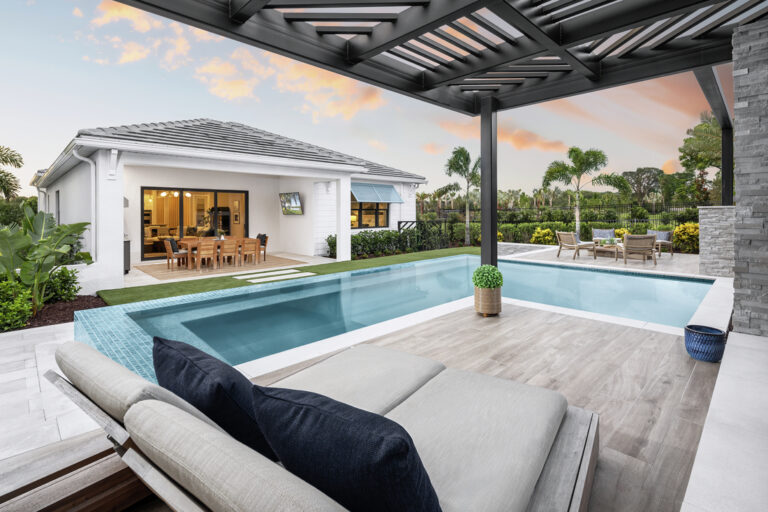
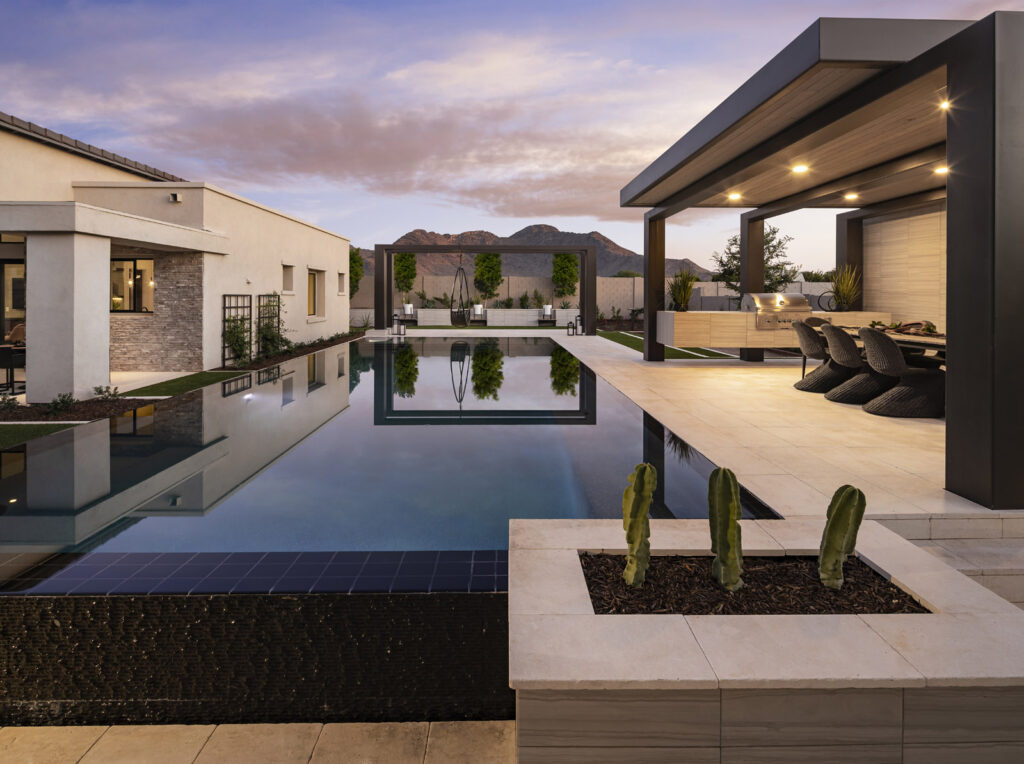
A Zero-Edge Pool is where the water flows over the edge, so that it sits level with the adjacent surface, creating a “still” effect and a more immediate interaction with the water – rather than stepping down into it. The pool wall remains visible.
This creates the look and feel of “endless” water and a more immediate interaction with the pool. The look is still, clean and restrained in appearance. A zero-edge pool is great for modern or classic styles.
What is a Lautner-Edge Pool?
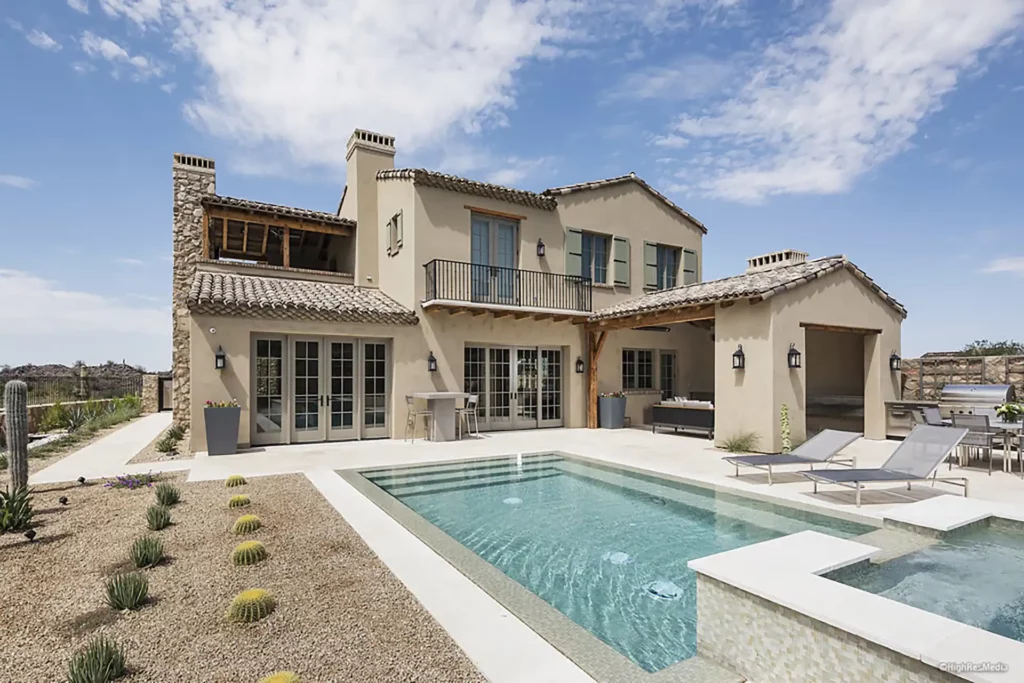
A Lautner-Edge Pool distinguishes itself as a variant of the Zero-Edge Pool. In this design, the pool’s wall remains hidden from view, seamlessly blending with the deck or surrounding edge. This highlights the interaction between the water and its adjacent surface in a striking manner. The result? An enhanced perception of size, a cleaner and sharper finish, and a closer proximity of the water to the decking as one approaches. The pool creates an illusion of borderlessness, achieving the optimal “mirrored” appearance sought in the pursuit of the Zero-Edge aesthetic.
Zero Edge Pools: The Clean Flush
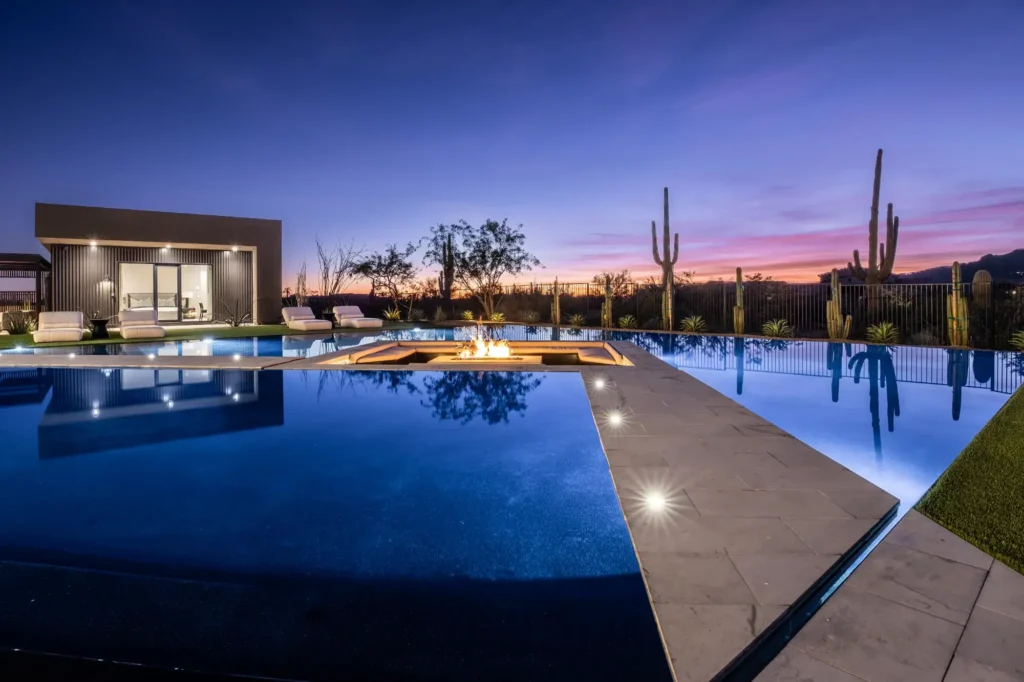
A zero edge pool is defined by a water surface that sits at precisely the same level as the surrounding deck or coping material. Water spills continuously over the pool’s perimeter into a concealed catch basin below, then recirculates back into the pool. From the swimmer’s perspective, the water appears to meet the deck at an invisible seam. From the observer’s perspective, the pool surface and the surrounding hardscape read as a single continuous plane.
The Visual Effect
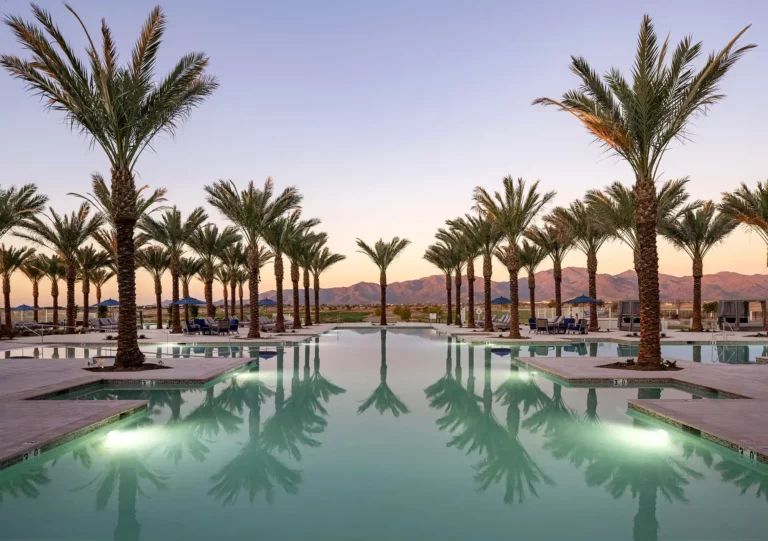
Zero edge pools have a particular visual quality that sets them apart from other edge styles: stillness. Because the water overflows uniformly around the entire perimeter, or along a specified edge, the surface maintains a mirror-like calm that amplifies reflections. An Arizona sky rendered in photographic detail across the surface of a zero edge pool is one of the most compelling visuals in luxury residential design.
This clean and restrained effect works especially well in modern and minimalist design environments, where the clean horizontal line of the water surface becomes an architectural element in itself. It pairs naturally with large-format coping materials, flush threshold transitions from interior to exterior, and material palettes that prioritize continuity over contrast.
Site Considerations
Unlike infinity edge pools, which highlights a particular view, zero edge pools work on flat sites. The catch basin is integrated into the surrounding deck structure, meaning the overflow is contained and managed without the property needing to drop away beneath it. This makes zero edge design highly versatile across the Phoenix metro, where many premium lots are relatively flat.
The trade-off is engineering complexity and cost. The precision required to achieve a perfectly level water surface across the entire perimeter, accounting for site settling, temperature expansion, and hydraulic pressure, demands meticulous structural work. The catch basin system also adds both upfront construction cost and ongoing maintenance considerations.
Best For
Zero edge pools are ideal for both modern and classic homes with strong horizontal architecture, flat or gently sloping sites, and homeowners who prioritize a clean aesthetic over dramatic elevation effects. They’re also particularly effective in spaces where the pool is viewed from above, from an upper-level terrace, a mezzanine, or interior rooms with elevated sight lines to the outdoor space.
Infinity Edge Pools: The View Amplifier
Also known as the negative edge or spillover, the infinity edge pool is arguably the most recognized form in luxury pool design. And for good reason. When executed correctly, on the right site, the effect is genuinely breathtaking: water appears to pour endlessly over one edge of the pool, dissolving into the landscape, the valley, the horizon beyond.
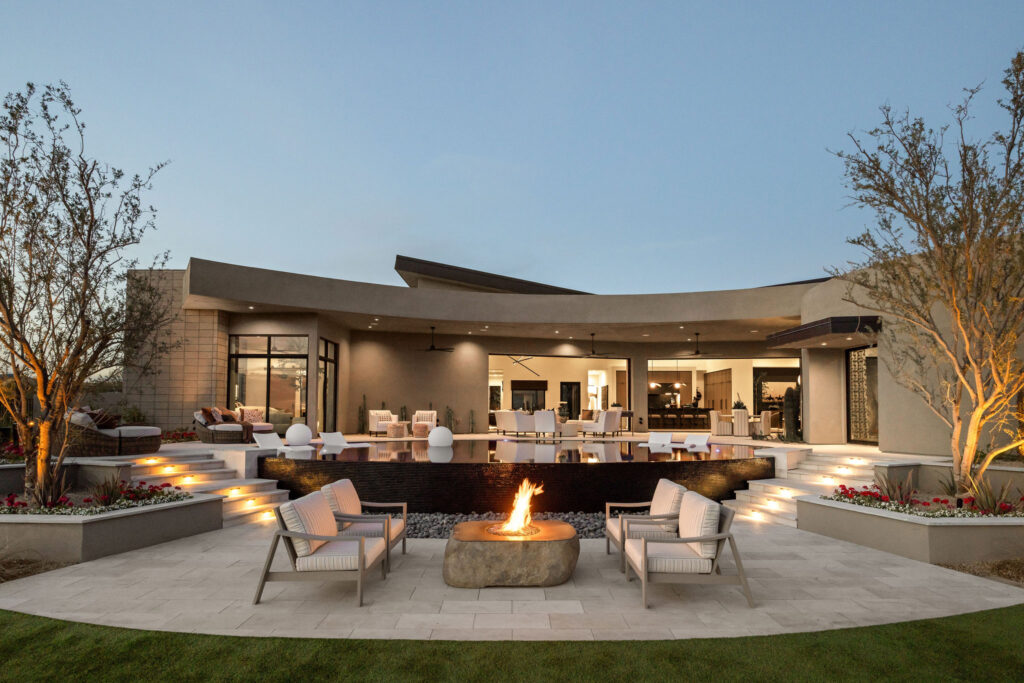
Unlike a zero edge pool, an infinity edge pool is directional. Water overflows over one primary edge, sometimes two, into a catch basin below, while the remaining sides are finished conventionally. The result is an intentional visual composition. The pool frames and amplifies a specific view, directing the eye outward with an effect that feels almost theatrical.
An infinity edge pool is most ideal when there are views to highlight or when the terrain naturally calls for it.
The Visual Effect
The infinity edge creates drama where the zero edge creates stillness. It’s the right choice when there’s a view worth celebrating: a valley floor, a mountain range, a golf course, a city light display after dark. The vanishing edge becomes a visual bridge between the pool and what lies beyond it, collapsing the distance in a way that makes the view feel owned rather than merely observed.
In Arizona’s resort communities, including Scottsdale, Paradise Valley, and Carefree, where premium lots frequently command elevated positions with panoramic sight lines, the infinity edge is a natural fit. It’s the pool that makes the most of what the site already offers.
Site Considerations
Infinity edge pools require meaningful grade change below the vanishing edge. The catch basin that collects overflow must sit lower than the pool deck, and the structural system that supports the pool’s edge over that drop requires careful engineering. On flat sites, infinity edges can be engineered by creating an artificial grade change through site work, but the effect is most compelling and most cost-effective when the natural topography provides the elevation differential.
The hydraulic engineering involved is also more complex than a standard pool. Pump sizing, catch basin capacity, and overflow rates must be calibrated precisely to maintain the continuous sheet of water that defines the infinity effect. When the system is properly engineered, the effect is seamless. When it isn’t, the result is a pool that alternately floods and starves its overflow edge, a problem that is both visually disappointing and mechanically damaging.
Best For
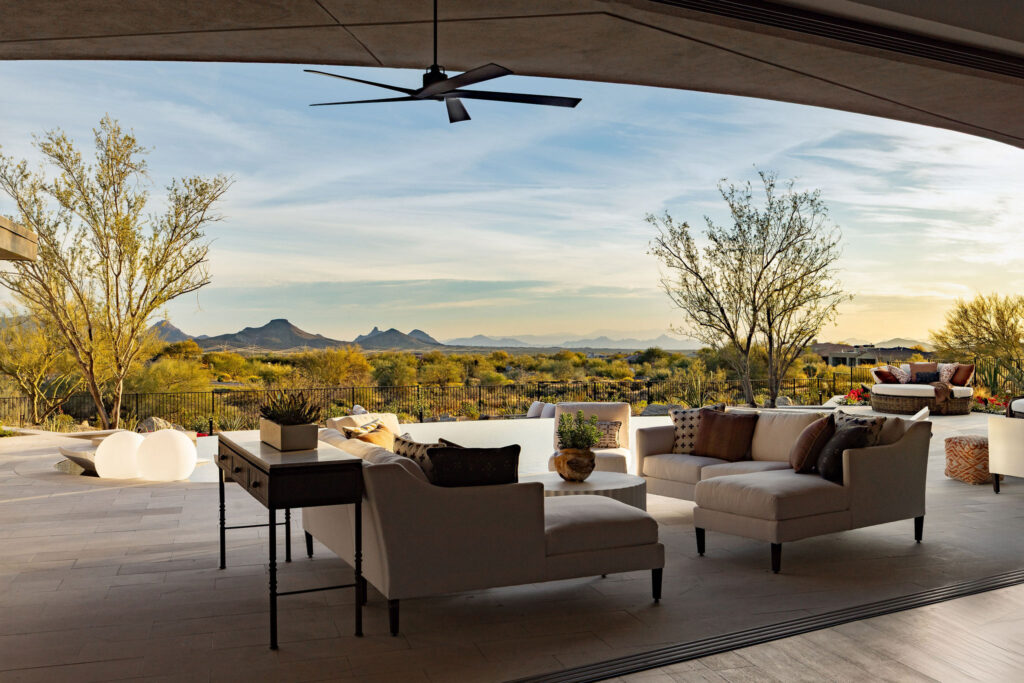
Infinity edge pools belong on elevated sites with compelling views. They’re the defining feature of hillside properties, ridgeline homes, and elevated pads that overlook valleys or natural desert. They work best as the visual centerpiece of a master-planned outdoor space, the element that everything else orients toward.
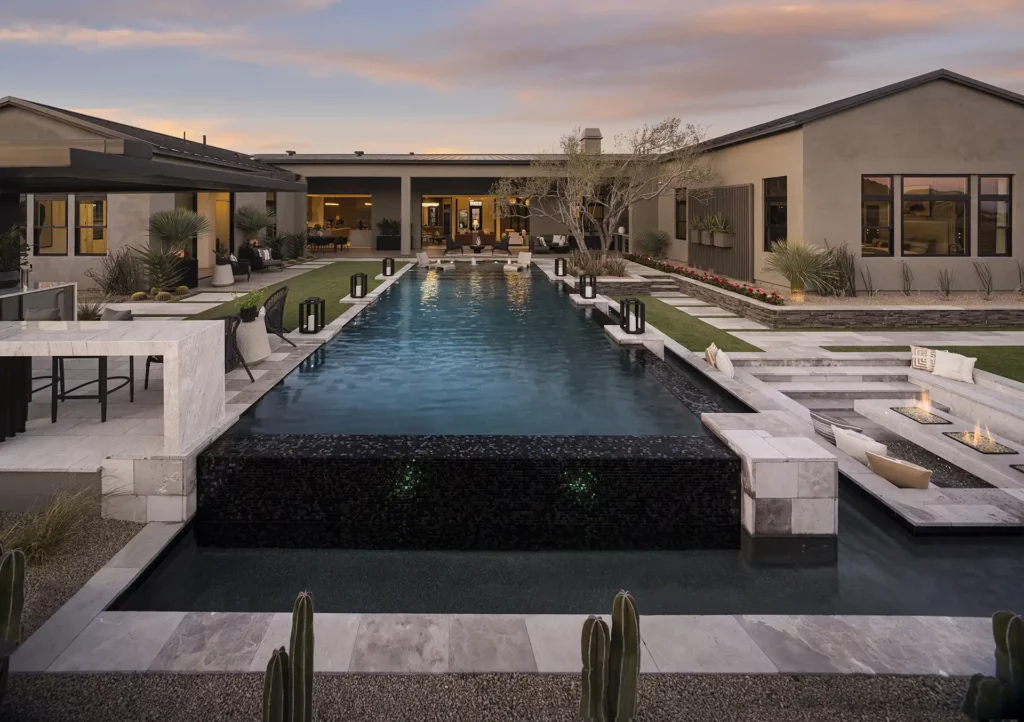
Two great examples of this style are the Edge at Joy Ranch V and Sunburst!
Watch this video to see the infinity edge pool in action.
Lautner Edge Pools: The California Original
Of the three edge styles, the Lautner edge is the one most closely identified with a specific architectural tradition, and with California in particular.
Named for the legendary modernist architect John Lautner, whose mid-century desert projects pioneered the concept, the Lautner edge pool features a perimeter beam that projects beyond the pool’s structural shell, creating a sharp, cantilevered lip that frames the water with an almost sculptural precision. The water sits tight against this edge, not overflowing it but meeting it, in a way that creates a strong, graphic horizon line that reads as architecture as much as landscape.
The Lautner-edge pool is a more refined variation of the zero-edge, where the pool wall is concealed, allowing the water to visually merge seamlessly with the surrounding deck or edge. This creates a sharper expression and introduces a mirrored effect.
The Visual Effect
Where the zero edge reads as seamless and the infinity edge reads as expansive, the Lautner edge reads as crisp, clean and sharp. It’s the most architecturally assertive of the three styles.
The style has experienced a significant resurgence in Arizona’s luxury market, driven partly by a renewed interest in mid-century modern residential architecture and partly by the way the Lautner edge photographs. In an era when outdoor spaces are documented and shared extensively, the graphic clarity of the Lautner edge translates powerfully to imagery, which has made it an increasingly requested style among design-conscious homeowners.
Site Considerations
The Lautner edge is more site-flexible than the infinity edge, but more architecturally committed than the zero edge. Because it doesn’t rely on overflow mechanics for its primary visual effect, it works on flat sites and elevated sites alike. The engineering considerations center on the structural integrity of the cantilevered beam, which must be sized and reinforced to project cleanly without cracking or deflecting over time, and on the relationship between the beam profile and the surrounding hardscape material.
Material selection matters more with a Lautner edge than with most other pool perimeter treatments. The projecting beam is a design element, not just a functional component, and its material, whether concrete, stone, or custom precast, contributes significantly to the finished character of the pool. At Creative Environments, our in-house metal fabrication capability allows us to create Lautner edge treatments in architectural steel as well, producing an edge profile that no standard pool contractor can replicate.
From a cost standpoint, the Lautner edge is typically the most expensive option.
Best For
The Lautner edge is ideal for homes with minimalist and modern contemporary designs, where the boldness of the projecting beam is in dialogue with the building’s own structural expression. It’s also a strong choice for homeowners who want a pool that reads as a design statement: something clearly and intentionally designed, not just installed.
2026 Finish Trends: Dark, Dramatic, and Arizona-Ready
Regardless of which edge style you choose, the interior finish of your pool is what determines its color, depth of field, and overall atmosphere. And in 2026, the dominant trend in Arizona’s luxury pool market is moving decisively away from traditional light blue.
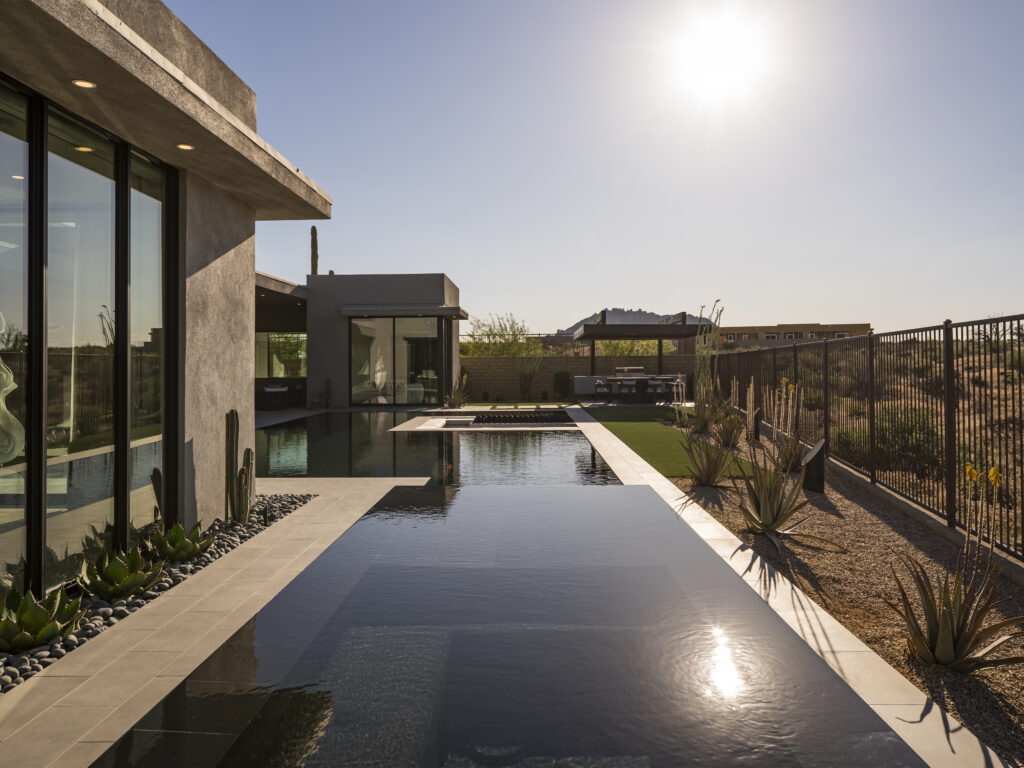
Graphite, deep sapphire, and black pebble finishes are now among the most requested options in the Creative Environments portfolio. These darker interiors create a mirror-like reflective quality in the water, amplifying the sky, the surrounding landscape, and the light effects produced by integrated LED systems. Where a light interior gives a pool a bright, recreational quality, a dark interior gives it a depth and drama more consistent with resort design.
Dark finishes also pair exceptionally well with all three edge styles described above.
In a zero edge pool, a deep graphite interior intensifies the mirror effect, turning the pool surface into an almost photographic reflection of the Arizona sky above.
In an infinity edge pool, a dark sapphire finish deepens the visual connection between the pool water and the landscape beyond, creating a more seamless tonal transition at the vanishing edge.
In a Lautner edge pool, a black pebble interior creates a contrast with the projecting beam that emphasizes the architectural line. The edge reads as a graphic horizon against deep, shadowed water.
The shift toward dark finishes is driven by design intent, not trend-chasing. These finishes simply perform better aesthetically in Arizona’s high-sun environment, particularly for pools that are used primarily in the evening or that are designed as visual anchors for the outdoor space.
Choosing the Right Edge for Your Property
The best edge style for your project is the one that responds most honestly to your site conditions, your architectural context, and how you intend to use and experience the pool.
Here’s a simplified framework:
Choose a zero edge pool if your site is relatively flat, your architecture is modern or minimalist, and you want a pool that reads as a seamless extension of the surrounding hardscape. The visual effect is one of stillness and precision.
Choose an infinity edge pool if your property has meaningful elevation and a view worth amplifying. The pool’s job is to celebrate what lies beyond it, and the infinity edge does that better than any other form.
Choose a Lautner edge pool if your architecture skews modernist or desert contemporary, and you want a pool that makes a design statement through the boldness of its own structure. The Lautner edge is a sculptural element, not just a perimeter treatment.
For homeowners uncertain about which direction is right for their property, Creative Environments’ 3D virtual pool design tool allows you to visualize each edge style rendered against your actual site, with your chosen finish, your surrounding hardscape, and your lighting scheme, before any construction decisions are finalized. It’s the clearest way to evaluate the options and arrive at a confident choice.
The Design Partner Makes the Difference
Any pool contractor can quote an infinity edge. Relatively few can execute one at a level where the hydraulic engineering, the structural work, the finish quality, and the relationship to the surrounding landscape are all resolved with equal care.
The difference between a pool that looks like a pool and a pool that looks like a piece of architecture is the design process behind it. At Creative Environments, our custom pool projects begin with a comprehensive master plan, one that positions the pool in its correct relationship to every other element of the outdoor environment, and proceed through a 3D design phase where every detail can be evaluated and refined before construction begins.
The result is a pool that wasn’t just built. It was designed. For more information or help getting started, contact us today to schedule your design consultation.
Creative Environments has designed and built custom pools across Scottsdale, Paradise Valley, Tempe, Phoenix, and the greater Arizona metro since 1950. With 65+ industry awards and an in-house design-build team, we deliver pools that perform as architecture, not just amenities.