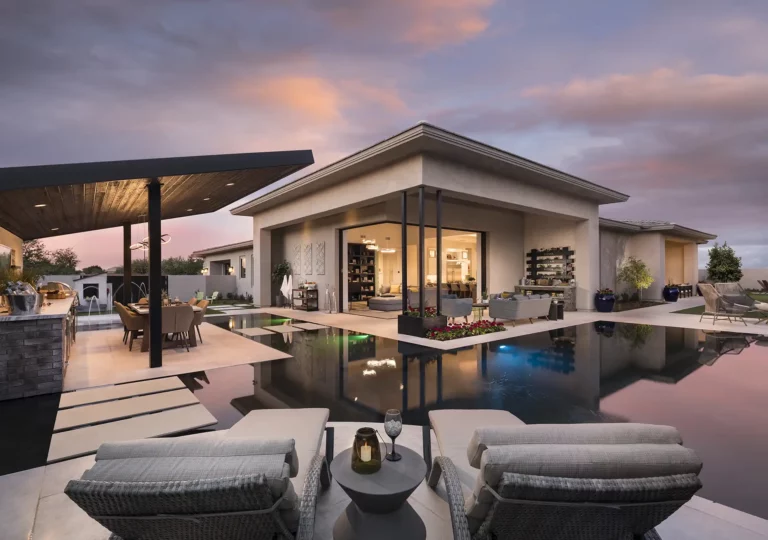
Older Tempe, Scottsdale, and Phoenix neighborhoods were platted decades ago with generous setbacks and wide open lots. Times have changed. Infill construction, second-story additions next door, and taller boundary walls have quietly closed in the sightlines that once made these yards feel private.
Most homeowners respond by adding a hedge or extending a wall. The results are rarely what they hoped for. Standard privacy solutions either feel like fortifications or turn into maintenance headaches in the desert climate.
The good news is that backyard privacy ideas do not have to look defensive. When privacy gets treated as a design problem, rather than a barrier problem, the solutions work harder and look better.
In this article, we cover four categories that consistently deliver both: desert-adapted screening plants, living walls, custom metal panels, and strategic hardscape placement.
Why Standard Privacy Solutions Fall Short in Arizona
Before getting into what works, it helps to understand why so many attempts fail within a few years.
Slat Fences and Lattice That Warp in the Sun
Wood and low-grade composite panels look great the day they go up. Sonoran Desert UV breaks them down fast. Softwoods dry out and split. Cheaper composites fade and warp within a few seasons. Replacement costs add up quickly on longer runs.
Solid Block Walls That Trap Heat and Kill the View
While extending a block wall higher may seem like the obvious fix, it unfortunately creates two new problems. Reflected heat pushes patio temperatures higher, especially on west-facing yards. Views that many older properties were designed around get blocked, including the mountain silhouettes that draw people to Arizona in the first place.
The better approach borrows from biophilic design, which brings living elements into the built environment. Modern fabrication handles the durability side. Together they solve the problem without the trade-offs.
Desert-Adapted Plants That Screen Year-Round
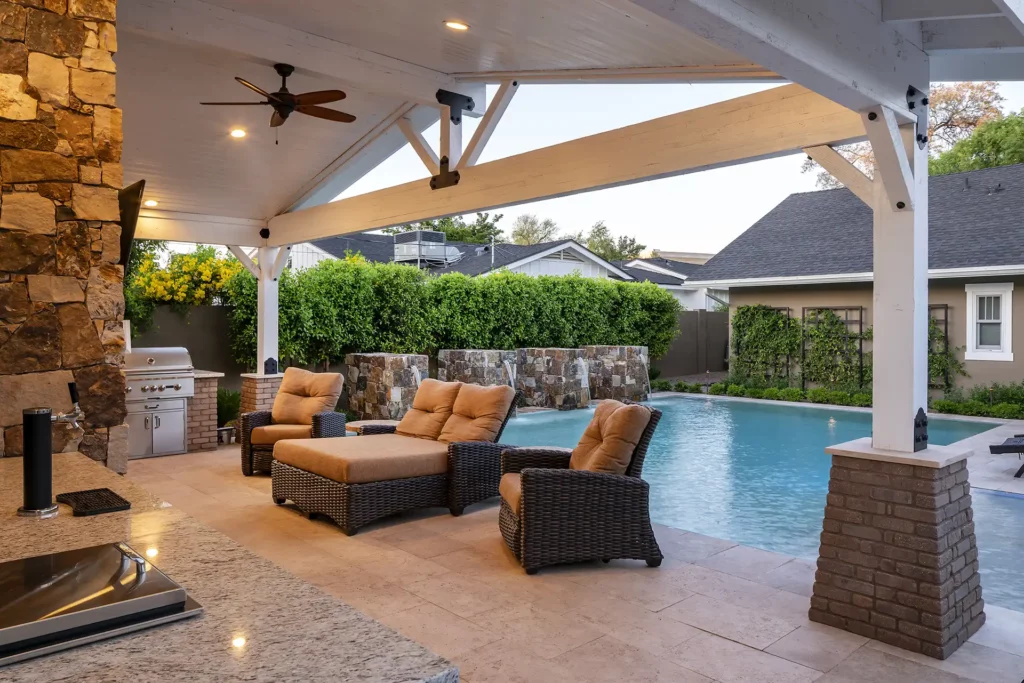
Plant selection is the foundation of any Arizona landscaping strategy. The right choices give you evergreen structure, minimal water use, and coverage that improves each year instead of declining.
Tall Evergreen Screens for Property Lines
For 12 to 15 foot living fences along property lines, three plants consistently perform.
- Hopseed bush (Dodonaea viscosa) grows quickly, tolerates heat, and takes shaping well. Purple varieties add color contrast.
- Arizona rosewood (Vauquelinia californica) is a slower native option with dense foliage and excellent longevity.
- Ficus Columnar and Nerium Oleander are both suitable options, if HOA permits.
Mid-Height Screening for Patio and Pool Areas
Not every screen needs to be tall. Layered planting in the 4 to 6 foot range softens edges and creates depth.
- Baja fairy duster brings feathery texture and hummingbirds.
- Green cloud Texas sage (Leucophyllum frutescens) offers wide, soft coverage that blooms after monsoon rains.
- Little John bottlebrush stays compact and formal, ideal for pool surrounds.
Trees in Arizona That Double as Canopy Privacy
Sometimes the problem is a neighbor’s second-story window, not a fence line. Canopy trees solve this without walling anything off.
Fraxinus Velutina
Fraxinus Velutina, also known as Arizona Ash, is a fast-growing shade tree that can help create a natural privacy screen as it matures. Its broad, dense canopy provides excellent coverage while adding cooling shade and enhancing the beauty of your backyard.
Ulmus Parvifolia
Ulmus parvifolia, commonly known as Chinese Elm, features a full, spreading canopy that helps increase privacy by softening sightlines around your outdoor space. Its dense foliage and graceful form make it an attractive choice for creating a more secluded and inviting backyard.
Ironwood (Olneya Tesota)
Ironwood is slow, but produces character-heavy specimens that anchor a design for decades.
Living Walls and Vertical Gardens for Tight Spaces
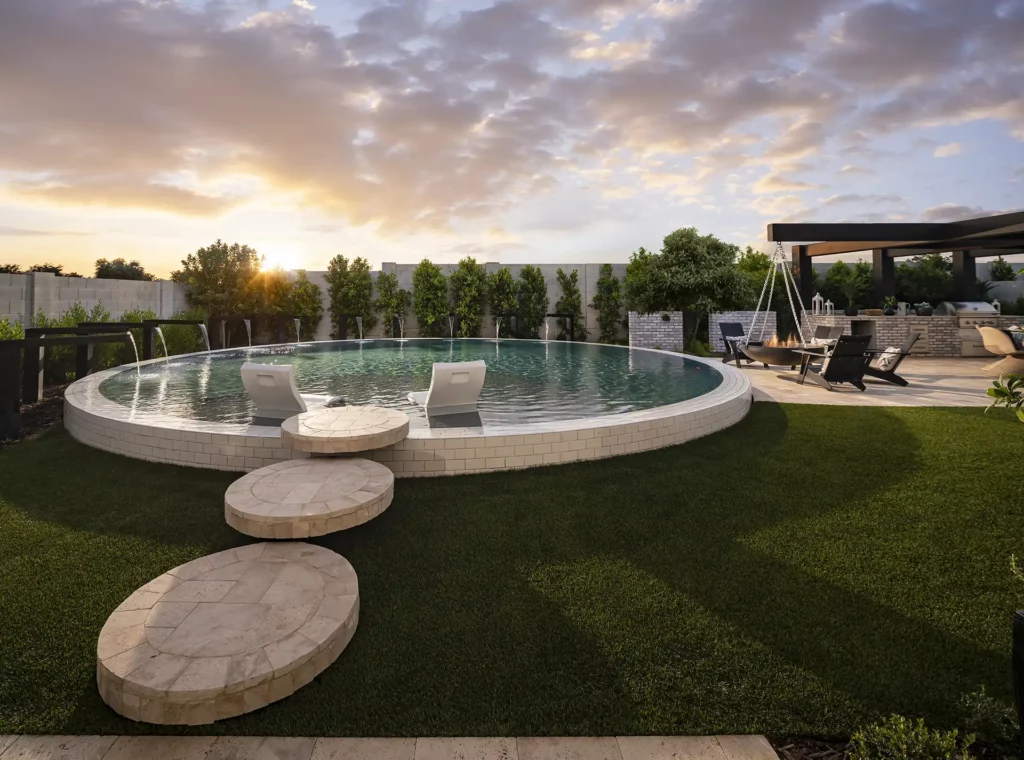
Established neighborhoods often have narrow side yards where traditional screening will not fit. This is where vertical solutions become the answer, not a nice-to-have.
What a Living Wall Actually is in the Desert
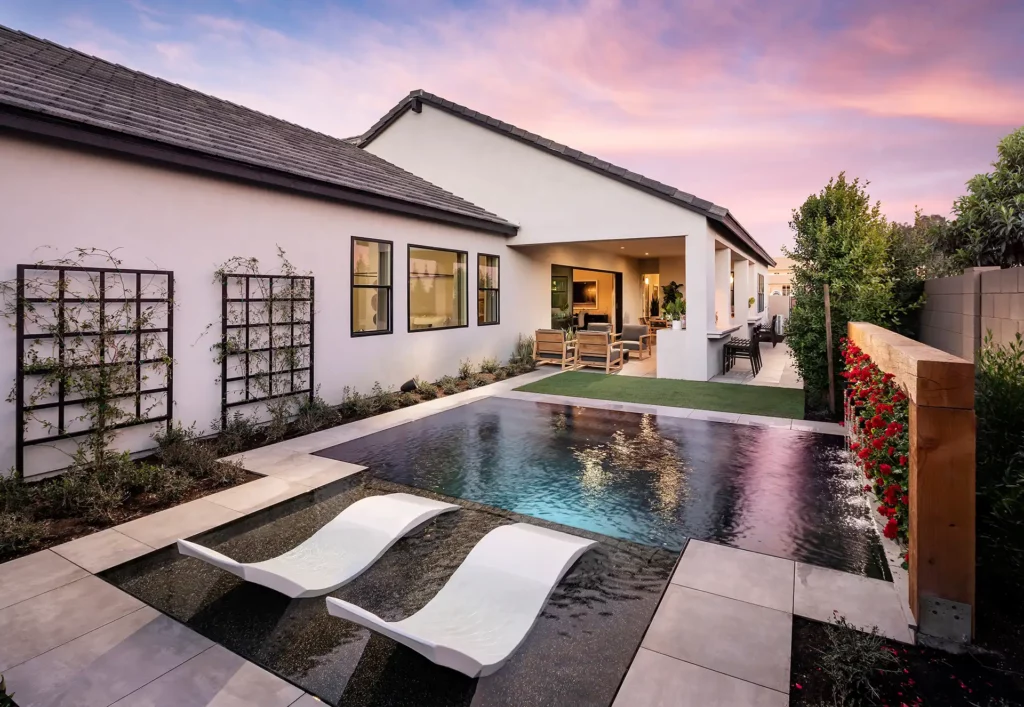
Two systems get called living walls, and they work differently. True modular living walls use irrigated cells mounted to a structure, with plants growing directly out of the wall face. Vertical trellis systems use climbing plants trained up a frame. Both have a place in Arizona backyards, but for different reasons and different budgets.
Plant Choices That Survive Arizona Living Wall Conditions
Not every plant handles vertical desert conditions. These consistently perform.
- Trailing rosemary drapes beautifully and handles heat.
- Purple heart (Tradescantia pallida) delivers rich color and forgives missed watering.
- Silver ponyfoot (Dichondra argentea) gives a silvery cascading effect.
- Autumn sage cultivars add flowering color pockets.
Where Living Walls Make the Biggest Impact
The best locations are casita walls, courtyard entries, and the blank side of a neighbor’s addition. These are spots where you want visual interest, not just coverage. Drip irrigation is required. Freeze protection matters for a few nights each winter, especially in higher elevation neighborhoods north of Camelback.
Living walls are premium features. They add real property value and set a backyard apart from every other renovation on the block. Creative Environments builds these into full backyard projects rather than treating them as bolt-on additions, which keeps the irrigation, structure, and plant selection working together from day one.
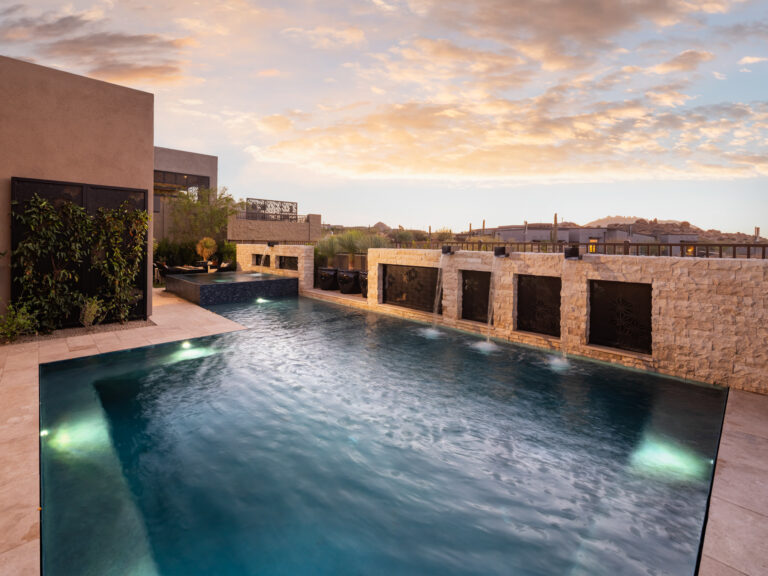
Custom Metal Privacy Panels From Our Shop
Some privacy problems are better solved with fabrication than with plants. This is where our on-site metal shop changes the conversation.
Why Custom Beats Off-the-Shelf
Big box decorative panels look tempting at the price point. Most are stamped from thin gauge steel with a light coating. Arizona monsoon humidity and UV finish them off within a few seasons. Custom fabrication uses heavier gauge steel and proper powder coating that holds up for decades, not years.
Design Directions That Work With Arizona Architecture
The design should match the home, not fight it. Some directions that consistently land well.
- Southwest-modern geometric patterns fit territorial and Santa Fe style homes.
- Sonoran motifs like saguaro silhouettes, agave forms, and sunburst patterns work on character properties.
- Clean linear slat panels suit contemporary and desert-modern builds.
- Corten steel develops a warm rust patina over time and pairs well with stone and stucco.
Where Metal Panels Solve Problems Plants Cannot
Some spots do not work for planting. Pool equipment areas, HVAC pads, side gate access points, and anywhere buried plumbing runs. Metal panels handle these zones without root conflicts or long-term maintenance. They also work as trellis backing for climbing plants when you want the mixed look.
Handling design, fabrication, and installation under one roof removes the coordination headaches of juggling separate contractors. The panel that gets installed is the same panel that got designed, at the same dimensions, on the same schedule.
Strategic Hardscape That Screens Without Walling You In
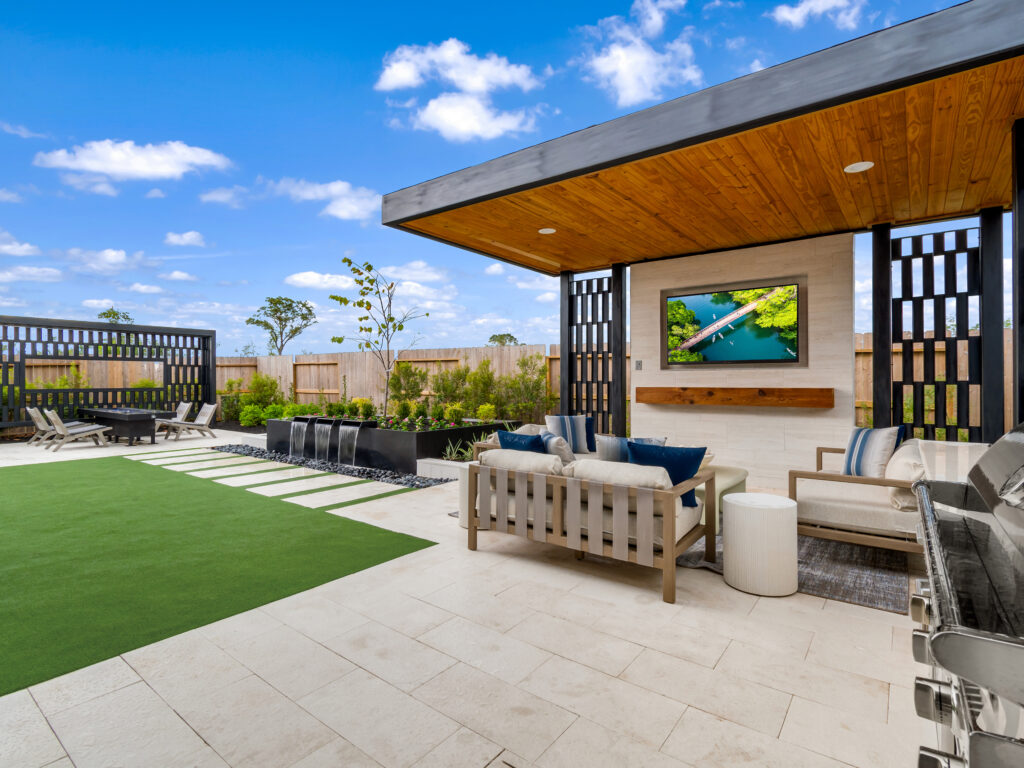
Most privacy problems can be solved before the first plant or panel goes in. Layout does a lot of the work if you use it well.
Grade Changes and Berms
Raising a planting bed three feet cuts sight lines from a neighbor’s second-story window without touching the property line. The berm becomes a design feature in its own right, not just a functional barrier.
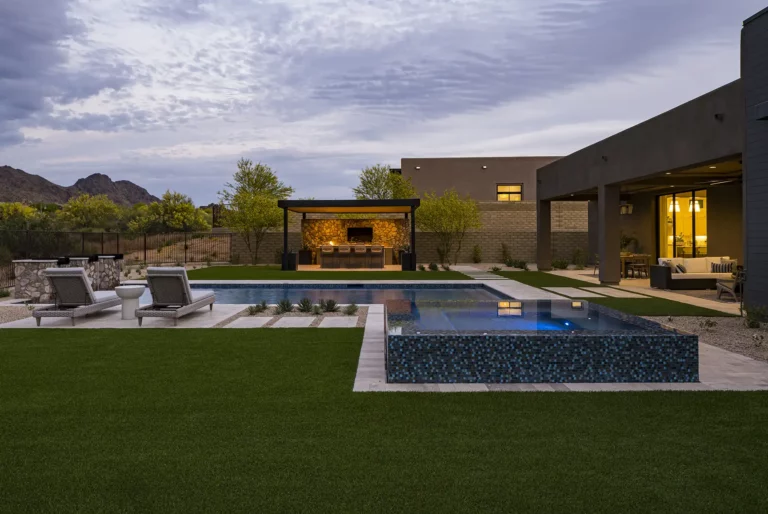
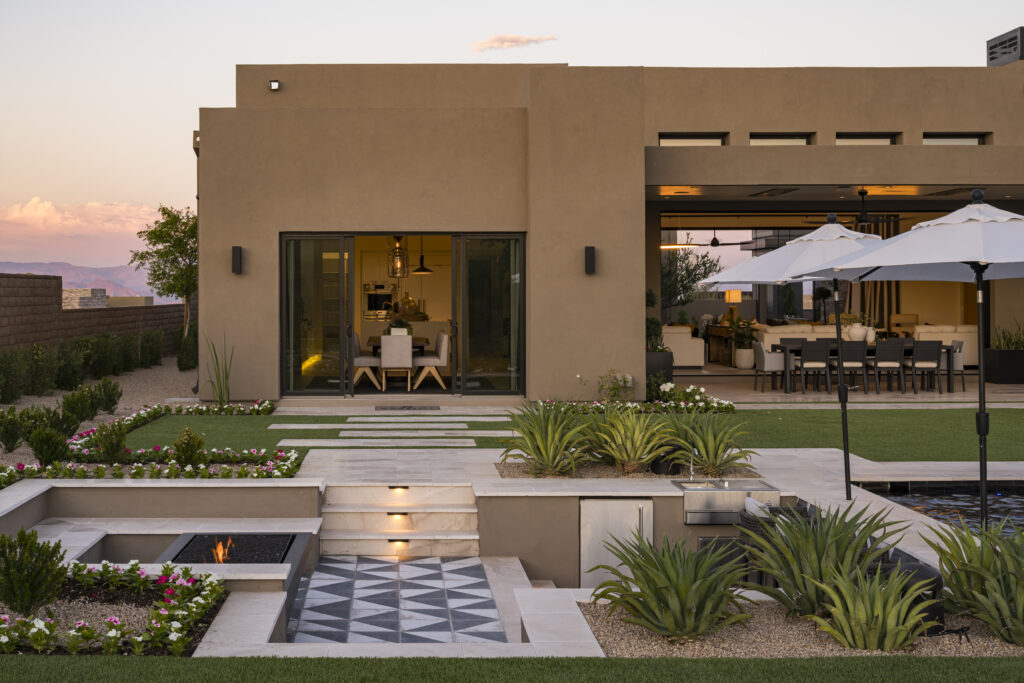
Another great example of this approach to using hardscape strategically for privacy lays at our Shadow Ridge project. Our team made the fire feature and bar area sunken, to provide additional privacy from nearby neighbors. With a creative and strategic approach, anything is possible.
Ramadas and Shade Structures
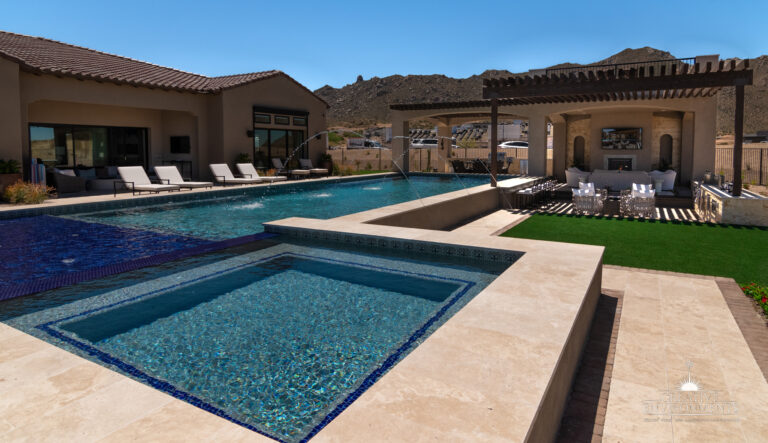
A ramada positioned correctly blocks the exact angle from a neighboring house, all while creating usable outdoor space. This is a case where privacy and lifestyle upgrades happen in the same footprint.
Water Features as Sound Screens
Visual privacy is only half the problem in dense neighborhoods. Acoustic privacy matters just as much. A water feature masks conversation, road noise, and pool equipment hum. The masking effect is noticeable within a few feet of the fountain.
Pergolas With Integrated Planters
A pergola with built-in planters delivers structure, shade, and vertical planting in one footprint. Climbing vines fill in over time, creating living overhead coverage that blocks upstairs neighbor views without a solid roof.
Layering the Four Elements for Real Privacy
The strongest results come from combining categories, not choosing one. Here is how a typical Tempe backyard might layer them.
- Along the property line: a mixed evergreen screen using hopseed and Arizona rosewood.
- Behind the pool equipment: a custom metal panel section with a matching side gate.
- On the casita wall facing the seating area: a modular living wall.
- Over the patio: a pergola with climbing vines and integrated planters.
- Near the seating area: a wall fountain for sound masking.
Each element handles a specific job. Together they create privacy that reads as design, not defense. This layered approach is standard on landscape design Arizona projects at Creative Environments, not an upgrade path.
Getting Started With Your Backyard Privacy Design
A good privacy plan starts with a site walk and honest sightline analysis. That means standing in your yard and noting exactly where the eyes come from. Which windows, which second-story additions, which walking paths. Most homeowners are surprised by how few problem angles there actually are.
From there, the design process covers HOA review for neighborhoods that have one, phasing options if the full plan cannot happen in one season, and clear timelines for design, fabrication, and installation. Larger properties often phase the work over two or three seasons. That spreads investment and lets plants establish between stages.
The Right Backyard Privacy Ideas Turn Constraints Into Design Wins
Privacy in an established Arizona neighborhood is rarely about building higher walls. It is about matching the right solution to the right sightline, then layering categories so each one does what it does best. Desert-adapted plants handle the property line. Living walls activate tight spaces. Custom metal panels solve the spots where plants cannot go. Hardscape layout ties everything together.
The Creative Environments team designs, fabricates, and installs all four in-house from our Tempe shop. If you are ready to see what your yard could look like with real privacy and real design working together, reach out to schedule a consultation.