There’s a reason the most breathtaking outdoor spaces in Scottsdale, Paradise Valley, and the greater Phoenix metro don’t look like they were assembled piece by piece. They weren’t. Behind every stunning poolscape, every seamlessly flowing outdoor kitchen, every luxury outdoor living space that stops guests mid-sentence, there’s a master plan.
In 2026, Arizona’s most design-forward homeowners are no longer approaching their outdoor spaces as a series of additions. They’re commissioning architecture-first master plans from the outset, and the results speak for themselves. This shift, from piecemeal backyard upgrades to holistic outdoor design, is one of the defining trends in luxury residential design this year, and it’s reshaping what’s possible for properties across the Valley.
At Creative Environments, this has always been our philosophy. We’ve built our reputation on it for 75 years. Here’s why starting with a master plan isn’t just the smart approach, it’s the only approach that reliably delivers spaces worthy of how you actually want to live.
What “Architecture-First” Really Means
The term gets used loosely, so let’s define it precisely.
Architecture-first outdoor design means that before a single shovel breaks ground, before a pool contractor is selected, before paving materials are sourced, before lighting fixtures are chosen, the entire outdoor environment is conceived as a unified whole. Every element is designed in relation to every other element. Every decision flows from a comprehensive vision.
The alternative is what most homeowners have done historically: add a patio, then a few years later add a pool, then realize the pergola would look better over there, then retrofit an outdoor kitchen that doesn’t quite align with the entertaining flow. The result is a backyard that works, but never quite coheres.
Architecture-first design eliminates that outcome entirely. It asks the most important questions upfront: How do you live? How do you entertain? Who uses this space and when? What’s the relationship between your interior and your exterior? What do you want to feel when you walk out the back door?
The answers shape everything that follows.
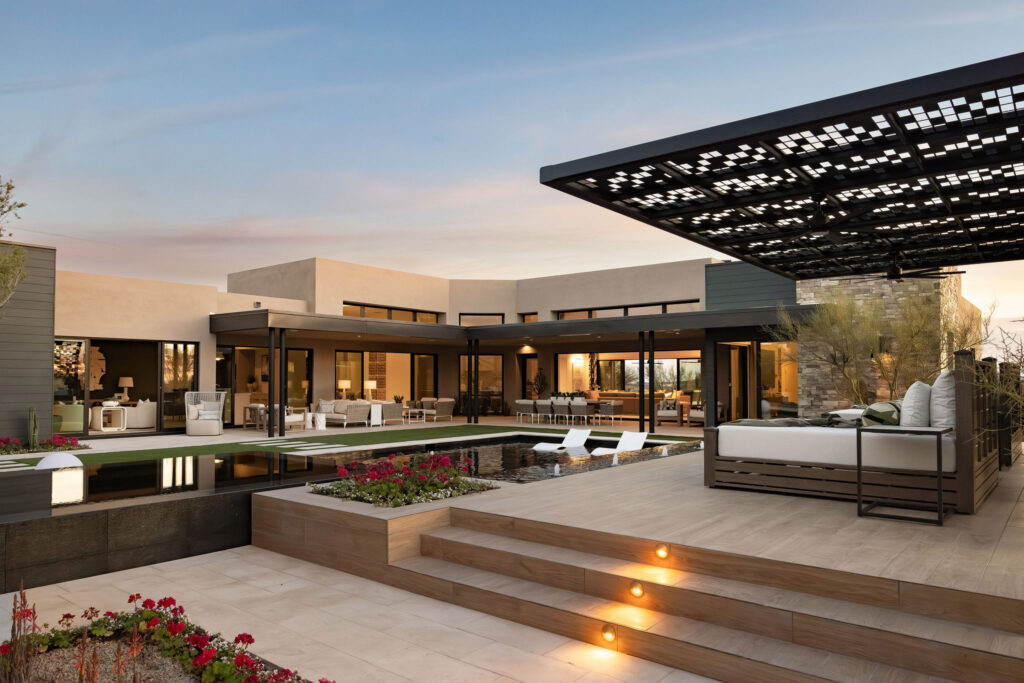
Zone-Based Design: The Framework Behind Every Luxury Outdoor Living Space
One of the most powerful tools in architecture-first design is zone-based thinking, the deliberate creation of distinct activity areas within a unified landscape. Rather than designing a “backyard,” we design a series of purposeful outdoor rooms, each with its own identity, function, and atmosphere.
At Creative Environments, a comprehensive master plan typically organizes the exterior environment around four primary zones:
1. The Cooking Zone
This is the operational heart of the outdoor space – where the work happens. A well-designed cooking zone is more than an outdoor kitchen; it’s a workflow. Counter heights are calibrated for ergonomic prep. Appliance placement is sequenced to mirror professional kitchen logic. Utility lines are run strategically to accommodate gas, plumbing, and electrical without retrofitting compromises. Materials, typically porcelain, stainless steel, and natural stone, are specified for Arizona’s intense UV exposure and temperature swings.
When this zone is planned as part of the master design rather than added afterward, it integrates seamlessly with the surrounding landscape. Cabinetry faces the pool deck naturally. The pass-through window aligns perfectly with the dining area beyond. Nothing feels bolted on, because nothing is.
2. The Dining Zone
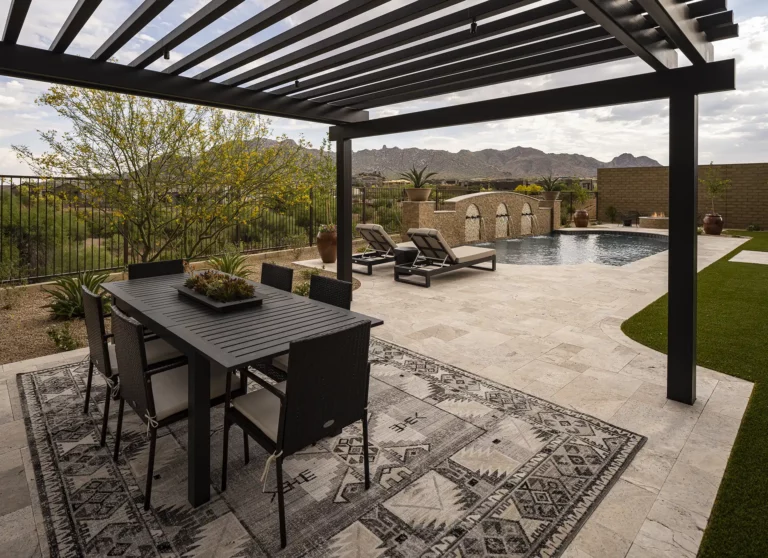
The dining area is where the cooking zone’s output becomes the evening’s focal point. In the finest outdoor spaces, this transition, from the preparation of the meal to its presentation, is choreographed through thoughtful spatial planning. The dining zone needs the right relationship to the kitchen (close enough for easy service, separated enough to feel distinct), the right orientation for evening shade and views, and the right overhead structure to define the space without enclosing it.
In many of our award-winning projects, a custom pergola or shade structure marks the dining zone architecturally, creating what we call an “outdoor ceiling”. The psychological cue that tells your guests they’ve arrived somewhere intentional.
3. The Lounging Zone
The lounging zone is about decompression. It’s where the pool spills into comfortable seating, where the fire feature draws guests after dinner, where Sunday mornings happen with coffee in hand. Designing this zone well requires understanding the arc of an evening and the cadence of a weekend. When does the sun hit this corner? How does this seating area relate to the pool edge? Does the furniture placement encourage conversation or inadvertently isolate people?
Great lounging zones feel inevitable. Guests settle into them naturally. That effortlessness is the product of careful planning.
4. The Wellness Zone
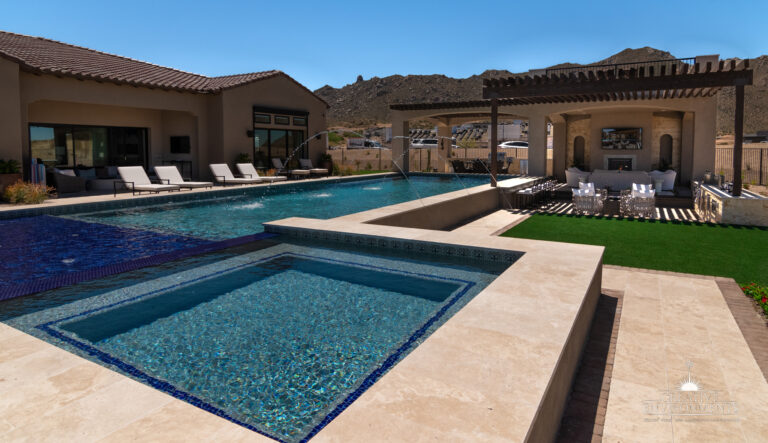
This is the zone that has experienced the most dramatic evolution in recent years. Today’s luxury outdoor spaces increasingly incorporate dedicated wellness areas: custom pools for fitness, relaxation and recreation, spas designed for hydrotherapy, cold plunge pools positioned for contrast therapy, meditation gardens defined by acoustic water features and carefully selected plantings, shade structures oriented to support yoga or morning movement.
When wellness is treated as a design pillar from the beginning of the planning process, rather than a spa dropped in wherever there’s room, the entire outdoor space benefits. Wellness zones create tranquility that radiates outward. They soften the environment, add sound, and introduce a quality of intentionality that elevates everything around them.
The 3D Design Process: Seeing Before Building
One of the most transformative aspects of working with a design-build firm like Creative Environments is the ability to see your completed outdoor space before construction begins.
Our 3D design process gives you a photorealistic rendering of your master plan. Pools with their finished plaster color catching late afternoon light, hardscape materials shown at scale with accurate texture and tone, plantings mature and in season, lighting casting its intended glow across the scene. You can walk through the space virtually. You can evaluate how the cooking zone relates to the dining area, whether the wellness zone has the privacy you envisioned, and how the fire feature reads from the main seating area.
This isn’t a luxury add-on. It’s an essential planning tool.
For homeowners investing in a comprehensive outdoor design, the ability to visualize and refine the master plan in 3D before breaking ground eliminates costly field changes and ensures that the finished project matches, and often exceeds, the original vision. It also creates genuine alignment between the homeowner and the design team, so that every decision is made with full visual context.
The 3D design process is one of the reasons our projects consistently achieve the level of finish that earns awards. When you can see the details beforehand, you can perfect them before they’re built.
Award-Winning Results: What a Master Plan Actually Produces
The proof is in the projects.
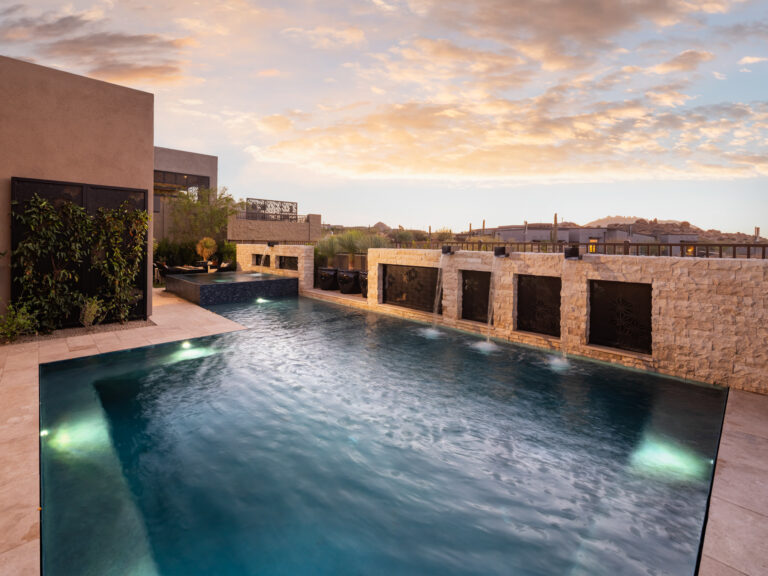
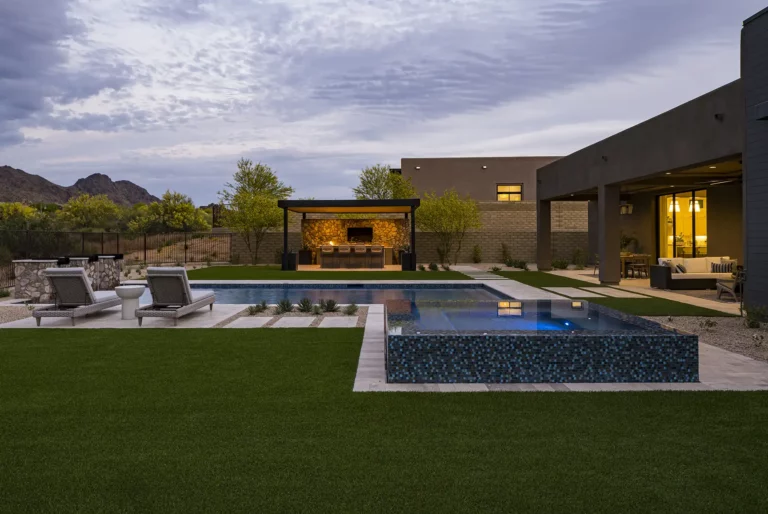
Located in North Scottsdale, Sunburst stands as one of Creative Environments’ most celebrated achievements in architecture-first outdoor design. Nationally acclaimed, this project is the proud winner of 16 awards and perfectly demonstrates what becomes possible when every element is intentional and cohesive. From the thoughtful overall plan and perfectly-positioned outdoor kitchen, to the sunken fire lounge with radiant seating, private master retreat spa and more. It’s all conceived as part of a single unified vision. Nothing was added. Everything was designed. The result earned industry recognition precisely because the coherence is visible in every frame.
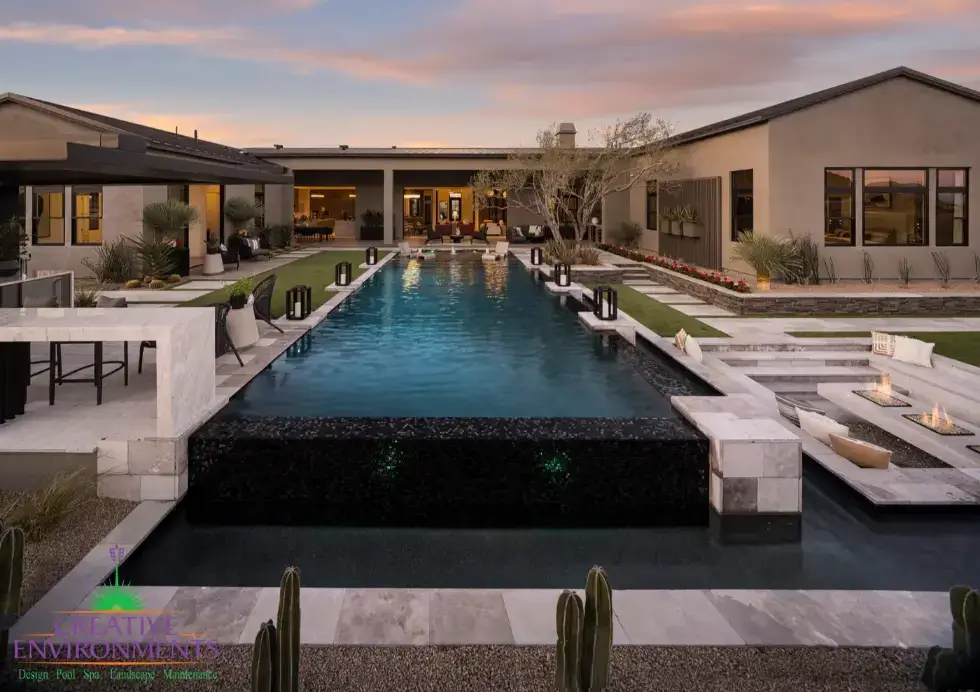
Stonegate Court is another study in master-plan thinking. The challenge on this project involved a complex site with multiple grade changes and distinct use patterns, such as family entertaining, adult relaxation, and a view corridor that needed to be protected. Zone-based design provided the framework for resolving these competing demands. Each area of the property was given a clear architectural identity and programmatic purpose. Transitions between zones were designed as experiences in themselves, not just paths between spaces. The completed project feels, as the best outdoor spaces always do, like it could not have been arranged any other way.
These outcomes are not accidents. They’re the product of a process that begins with a plan.
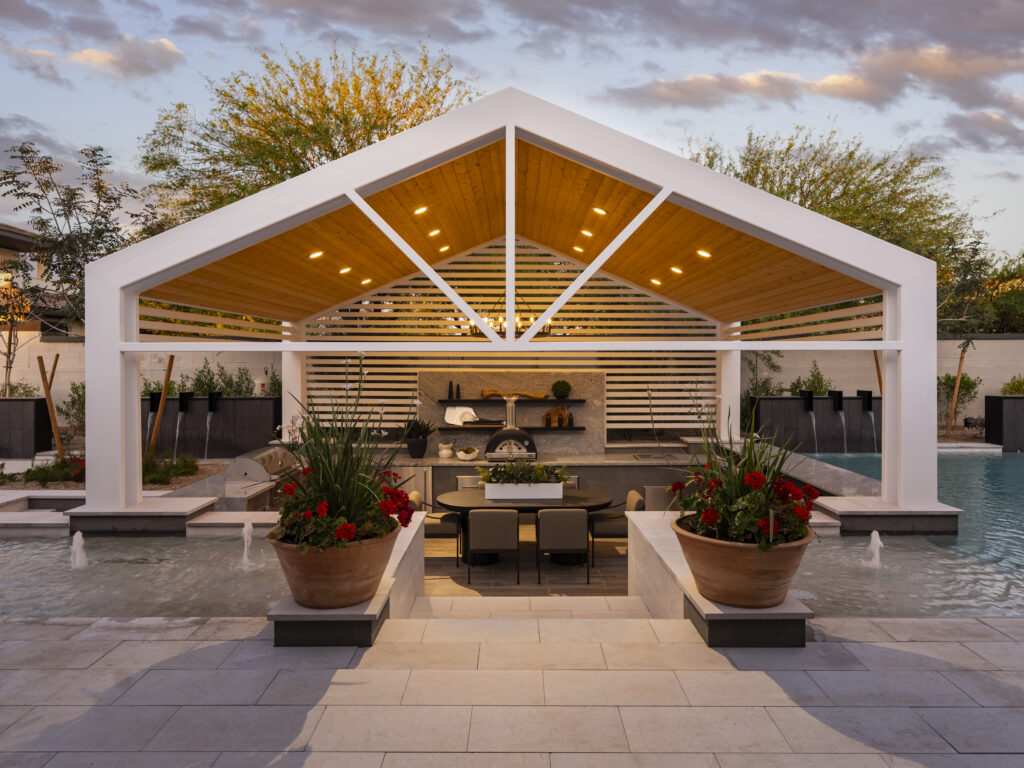
Why Piecemeal Design Costs More in the Long Run
It’s worth addressing the economics directly, because the upfront investment in comprehensive master planning is sometimes perceived as a luxury reserved for the largest budgets.
In practice, the opposite is true.
When an outdoor space is designed piecemeal, a pool permit here, a patio expansion there, an outdoor kitchen added when the budget allows, each phase introduces constraints on the next. The pool is positioned without accounting for the kitchen that will eventually need gas and water nearby. The pergola footings conflict with the irrigation lines that were run before the shade structure was in the plan. The outdoor lighting scheme was designed for a smaller space and now needs to be supplemented, but the electrical capacity is at its limit.
Retrofit work is always more expensive than planned work. Removing and relocating completed installations wastes material and labor. Lost opportunity, the pool that could have been positioned three feet further west to unlock the perfect view, can never be fully recovered.
A comprehensive master plan, designed and phased thoughtfully from the beginning, allows each phase of construction to prepare for the next. Infrastructure is run correctly the first time. Placement decisions are made with full knowledge of what comes later. The budget is allocated strategically across a sequence that builds toward a completed vision.
Over the life of a project, this approach consistently produces a better outcome at a lower total cost.
The Creative Environments Design Process
For homeowners considering a major outdoor transformation, here is how architecture-first design works in practice at Creative Environments.
It begins with an in-depth discovery conversation. Not a sales meeting, but a genuine exploration of how you live, what you value, what the outdoor environment needs to deliver. We ask about your entertaining style, your family’s rhythms, your aesthetic sensibilities, your relationship to the desert landscape surrounding your home.
From there, our design team develops a comprehensive master plan. This document defines the zones, establishes the material palette, resolves the site challenges, and sequences the construction phasing. It becomes the governing document for every subsequent decision.
The 3D visualization phase follows, rendering the master plan in photorealistic detail so you can evaluate, refine, and confirm the vision before construction begins. This is where the plan is tested and perfected.
Construction is executed by our in-house team. Creative Environments brings everything under one roof: design, construction, metal fabrication, and ongoing maintenance. This integrated model, uncommon in the industry, ensures that the vision established in the master plan is executed with complete fidelity. Nothing is lost in translation between designer and contractor, because they’re the same team.
The result is a finished outdoor environment that matches what was designed. And more importantly, that delivers what was envisioned from the very first conversation.
Is a Master Plan Right for Your Luxury Outdoor Living Project?
Architecture-first master planning is the right approach for any homeowner who wants a cohesive, elevated outdoor environment – not just functional outdoor space.
It’s particularly valuable for new builds, where the opportunity to integrate indoor and outdoor design from the beginning is greatest. It’s equally valuable for comprehensive renovations, where a master plan can provide the framework for phasing improvements across multiple seasons without compromising the ultimate vision.
If you’re planning a new home in the Phoenix metro area, or if you’re ready to transform your existing outdoor environment from a collection of spaces into a unified experience, the place to begin is the master plan.
For inspiration before you begin, explore The Ambrosia! The perfect example of luxury outdoor living in Queen Creek, Arizona.
Start With the Plan That Makes Everything Possible
The outdoor spaces that stop guests mid-sentence, that get photographed and shared, that earn awards and generate genuine admiration. They all started with a conversation, a discovery process, and a plan.
At Creative Environments, we’ve been executing that process for over 75 years. Our portfolio of award-winning projects across Scottsdale, Paradise Valley, Tempe, and the greater Phoenix metro represents what architecture-first outdoor design produces when it’s done at the highest level.
The process of creating a luxury outdoor living space begins with a design consultation. Let’s talk about what your outdoor space could be. Not as a series of additions, but as a complete vision.
Book your design consultation today!
Creative Environments has served Arizona homeowners since 1950. With 65+ industry awards, an in-house design-build team, and a comprehensive 3D design process, we are Arizona’s premier luxury outdoor living design firm. Serving Scottsdale, Paradise Valley, Tempe, Phoenix, and the greater Valley.