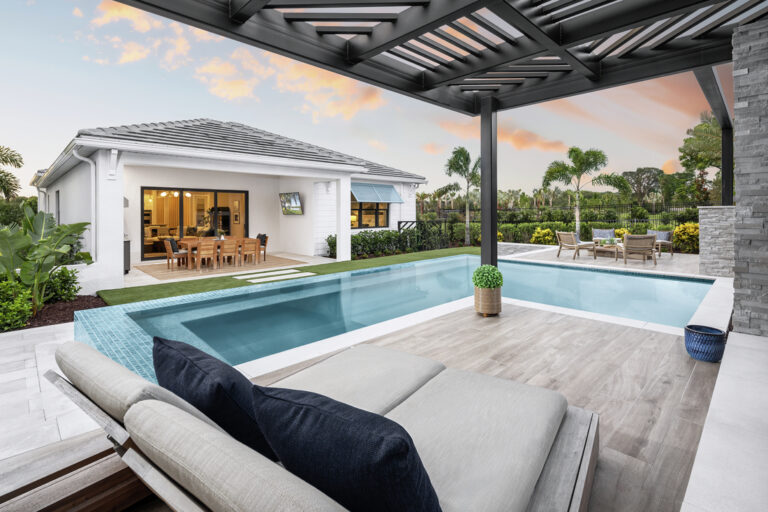
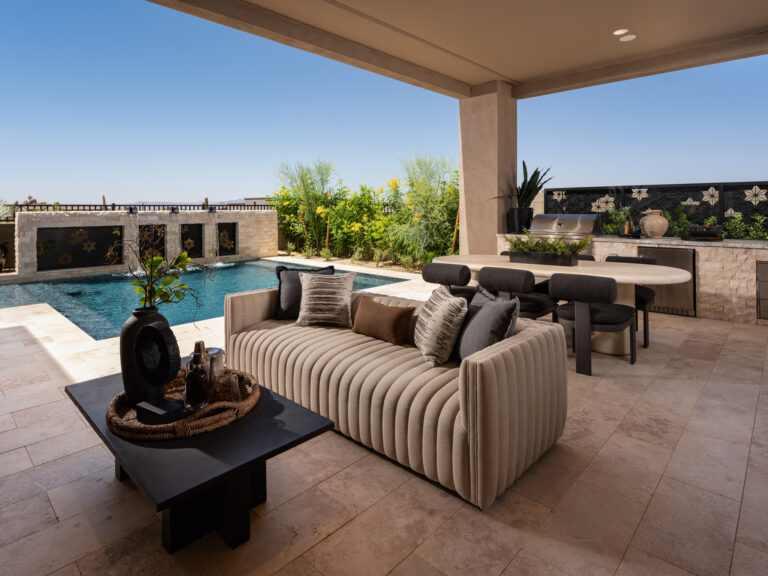
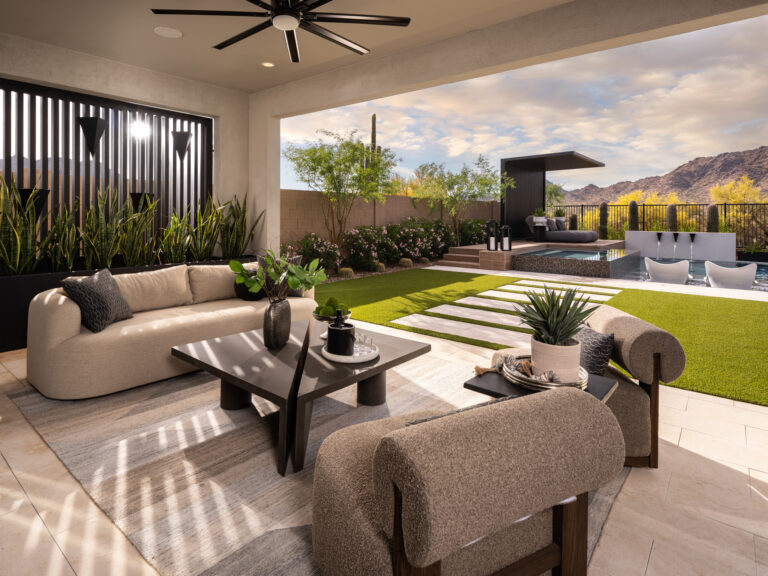
There’s a moment that happens in well-designed Arizona backyards, usually around seven in the evening when the sky is shifting from gold to deep blue and the air is finally beginning to cool. Guests stop moving. Conversations slow. Everyone orients, almost without realizing it, toward the same place.
That place is almost always a water and fire feature.
The combination of flame and flowing water has become the defining focal point of Arizona’s finest outdoor entertaining spaces in 2026. Linear gas fire tables positioned at the edge of a reflecting pool. Sculptural water walls with a fire element integrated at their base. Fire bowls mounted above sheer descent water features, the flame and the flow occupying the same visual field. These are not decorative add-ons. They are the architectural anchors around which great outdoor spaces are organized.
At Creative Environments, we’ve been designing fire and water features for decades. What’s changed recently is the ambition behind them, and the sophistication of how they’re integrated into the broader outdoor environment. Here’s what’s driving that shift, and what it means for homeowners ready to transform how their backyard feels after dark.
Why Fire Features and Water Features Work Together
The pairing seems intuitive once you experience it, but it’s worth understanding why fire and water are so compelling in combination, because that understanding shapes how they should be designed.
Fire and water engage two entirely different sensory registers simultaneously. Fire is warm, dynamic, and unpredictable. Its light is orange and flickering. It draws the eye because it never holds perfectly still. Water, particularly moving water, is cool in tone, rhythmic, and acoustically present. The sound of a sheer descent or a water wall creates a layer of ambient noise that softens the edges of a gathering, absorbing conversational fragments and creating a kind of acoustic privacy that flat, silent spaces cannot provide.
Together, they occupy both senses at once. The eye is engaged by the movement of the flame. The ear is engaged by the sound of the water. The result is a sensory completeness that makes people feel settled and at ease in a way that neither element achieves independently.
There’s also a practical dimension specific to Arizona. Fire features extend the usability of outdoor spaces through the cooler months, from October through April, when evening temperatures drop quickly after sunset. Water features moderate the perceived temperature during the warmer months, when the sound and visual presence of moving water creates a psychological cooling effect that complements misting systems and shade structures.
A space designed with both elements is genuinely more comfortable year-round than one designed with neither.
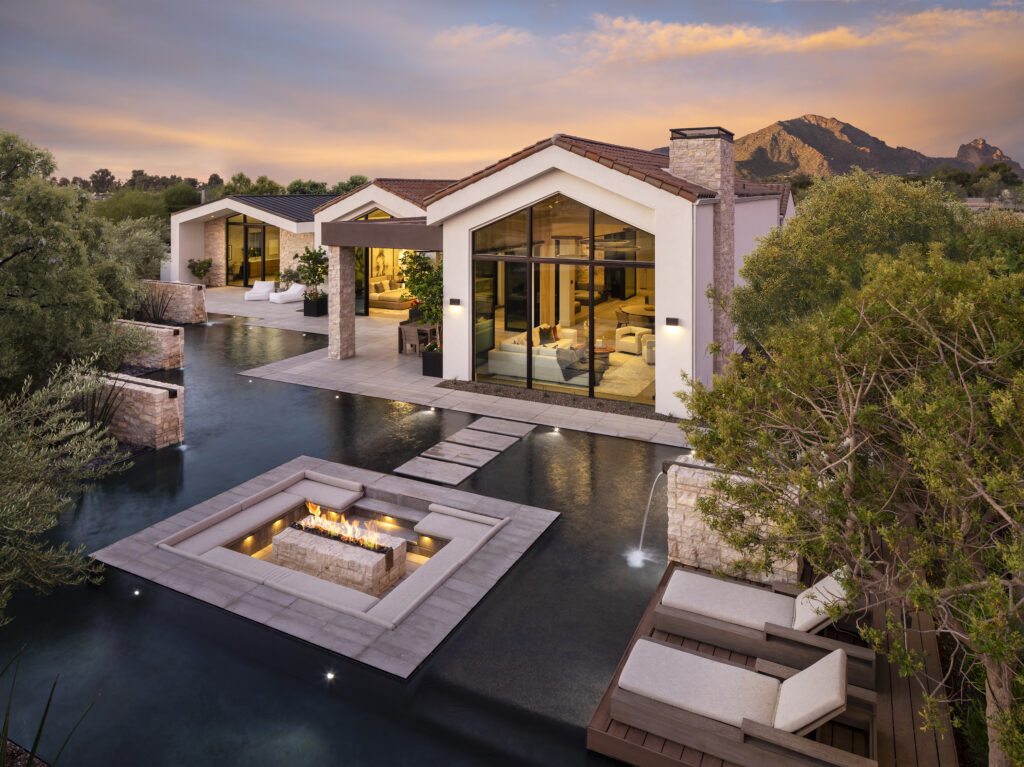
The Forms: What’s Being Built in 2026
The category of fire and water features covers a wide range of forms, from modest fire bowls positioned at the edge of a pool to elaborate sculptural installations that serve as the primary architectural statement of an outdoor space.
In 2026, the dominant forms in Arizona’s luxury residential market reflect a preference for clean lines, integrated design, and features that feel like they belong to the architecture rather than being placed in front of it.
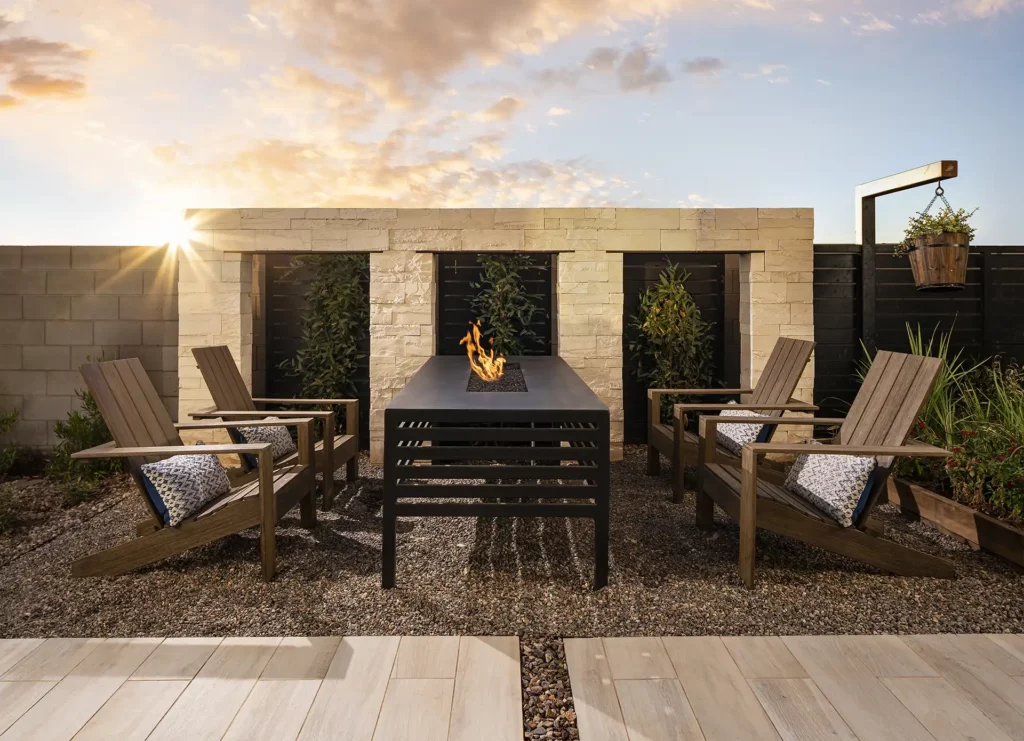
Linear Gas Fire Tables
The linear gas fire table is the most versatile fire feature in current residential design. A rectangular or elongated trough, typically constructed in concrete, steel, or natural stone, houses a continuous gas flame that runs the length of the feature. The effect is a horizontal band of fire that reads as a clean, architectural element rather than a traditional campfire-style focal point.
Linear fire tables work at multiple scales. A compact version seats four to six people around a central flame, functioning as an outdoor dining or conversation table with fire integrated into its surface. A larger version becomes a freestanding installation that anchors a lounge zone from a distance, visible from the kitchen and dining areas and pulling guests toward it after dinner.
The linear form pairs naturally with the design vocabulary of modern and desert contemporary architecture, where horizontal emphasis and material restraint are defining principles. In our portfolio, some of the most successful linear fire table installations are those where the table’s material and finish was specified to match or complement the surrounding hardscape, making the feature feel like a continuation of the landscape rather than an object placed within it.
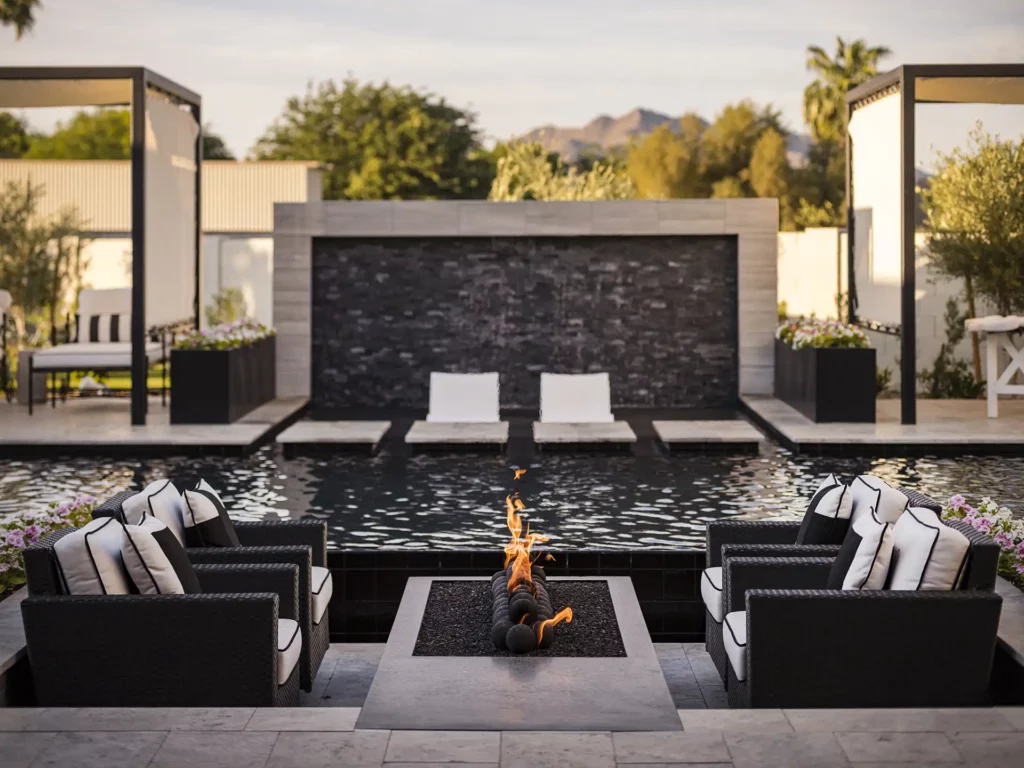
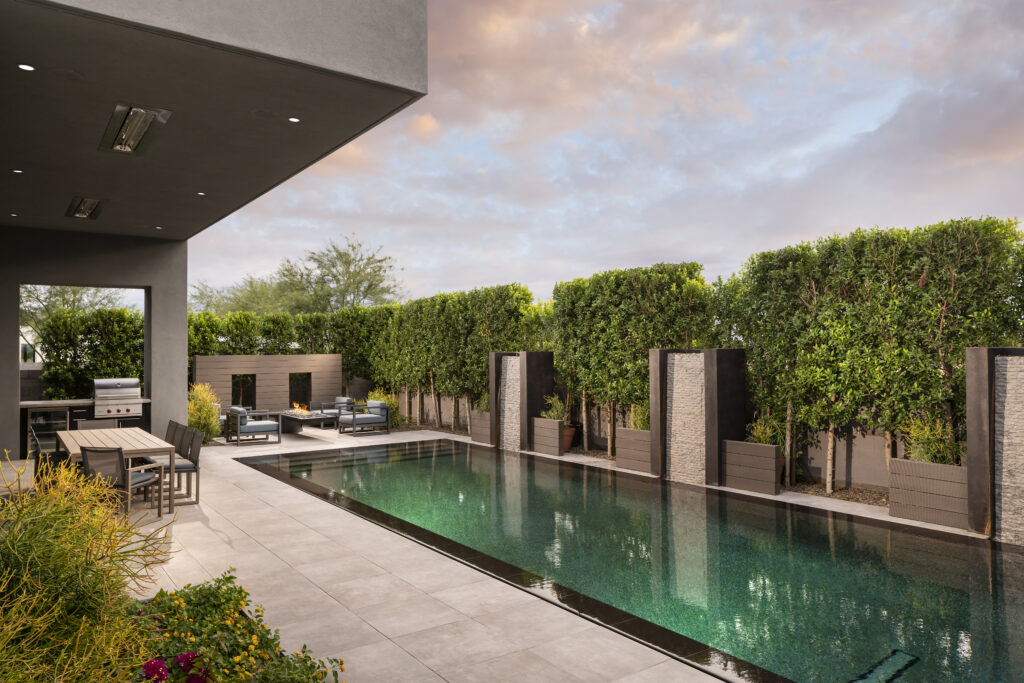
When positioned at the edge of a reflecting pool or combined with a water element at its base, the linear fire table becomes something more: the flame reflects in the water below, doubling the visual presence of the feature and creating the kind of image that stops guests mid-sentence.
Sculptural Water Walls
A water wall is a vertical surface over which water flows in a controlled sheet, film, or series of streams. At its simplest, it’s a flush-mounted panel of stone or porcelain with a recirculating water system behind it. At its most elaborate, it’s a custom-fabricated architectural installation that defines an entire wall of the outdoor space.
What makes water walls particularly powerful as design elements is their acoustic contribution. A well-sized water wall produces enough ambient sound to create genuine acoustic separation between zones within the outdoor space, making a dining area feel distinct from a lounge area even without physical walls between them. This is one of the reasons water walls are so frequently incorporated into outdoor spaces that are intended to function as entertainment environments: the sound design is doing work that no amount of furniture arrangement can replicate.
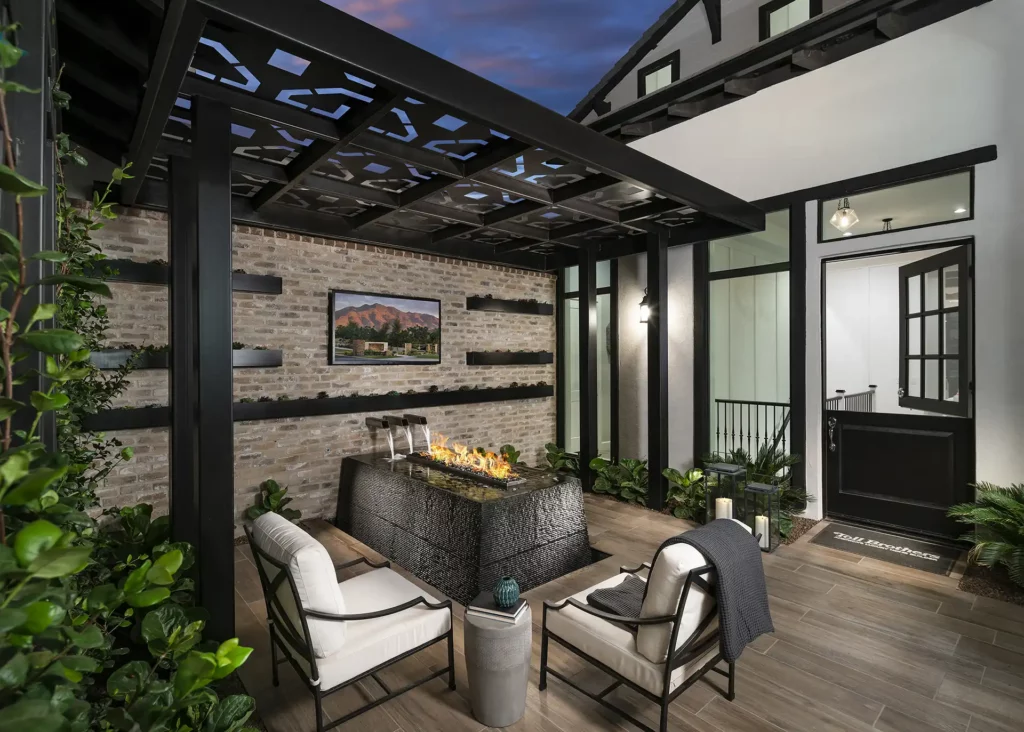
When fire is integrated into a water wall installation, either through fire elements mounted at the base, embedded within the wall structure, or positioned as separate elements in immediate proximity, the acoustic and visual effects of both are amplified. The eye moves between the flame and the flowing water. The warmth of the fire is offset by the cooler presence of the water feature behind it.
In Creative Environments’ projects, water walls are frequently used to address site challenges as well as design opportunities. A wall that screens an adjacent property or a utility area can simultaneously function as a water feature, transforming a practical necessity into a genuine design asset.
Fire Bowls and Fire Pits
The fire bowl and fire pit remain essential elements in Arizona outdoor design, and their longevity as popular features reflects something real: there is no substitute for the social dynamic created by a fire at the center of a gathering.
The contemporary fire bowl has evolved considerably from its earlier forms. Custom-fabricated in architectural concrete, corten steel, or natural stone, today’s fire bowls are sculptural objects as much as functional features. Their scale, profile, and material are specified to complement the surrounding design rather than dominate it. A well-proportioned fire bowl on a low plinth, positioned at the center of a lounge zone, creates an intimate gathering dynamic that a linear fire table does not replicate.
Fire pits, particularly in-ground or flush-mounted versions that integrate with the surrounding hardscape, are experiencing renewed interest as backyard design becomes more sophisticated. The flush fire pit, where the flame emerges from a surface-level opening in the paving rather than from a raised bowl or table, has a particular clarity of effect. The fire appears to rise directly from the ground, with no containing vessel visible, creating an effect that reads more like landscape architecture than furniture.
Creative Environments’ in-house metal fabrication capability allows us to produce custom fire bowls, fire pit surrounds, and fire table frames that are genuinely one of a kind. The design freedom this provides, specifying a precise profile, finish, and scale that no catalog product offers, is one of the most significant advantages of working with a firm that controls its own fabrication.
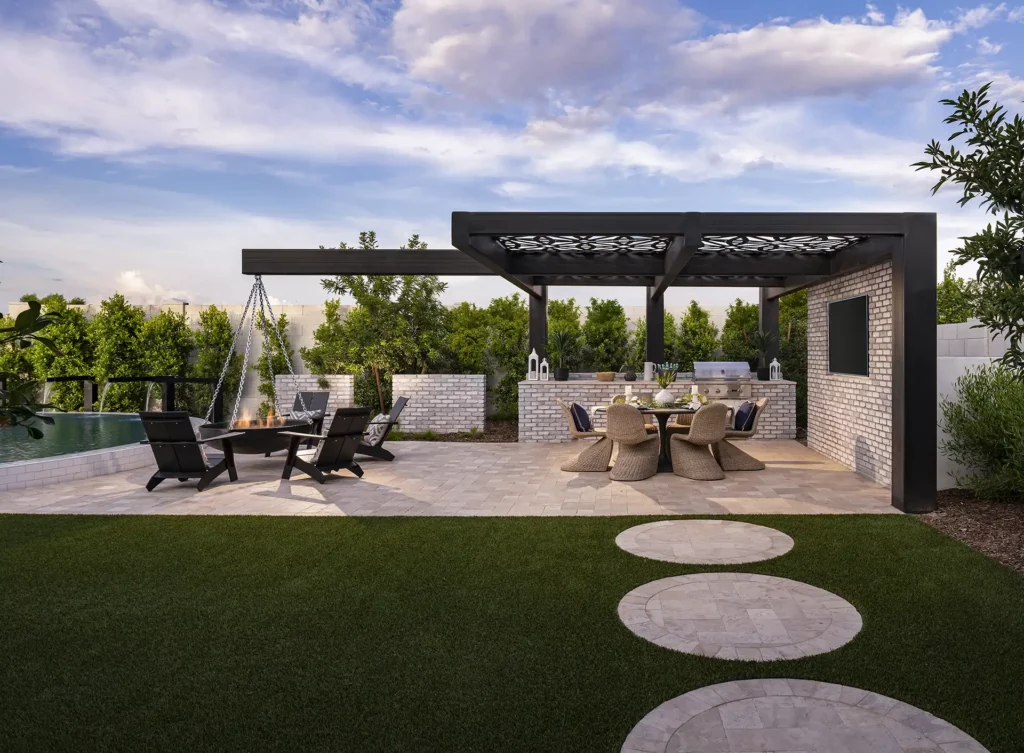
Combined Fire and Water Installations
The most striking fire and water features in current residential design are those where the two elements are resolved into a single unified installation rather than positioned as separate pieces in proximity.
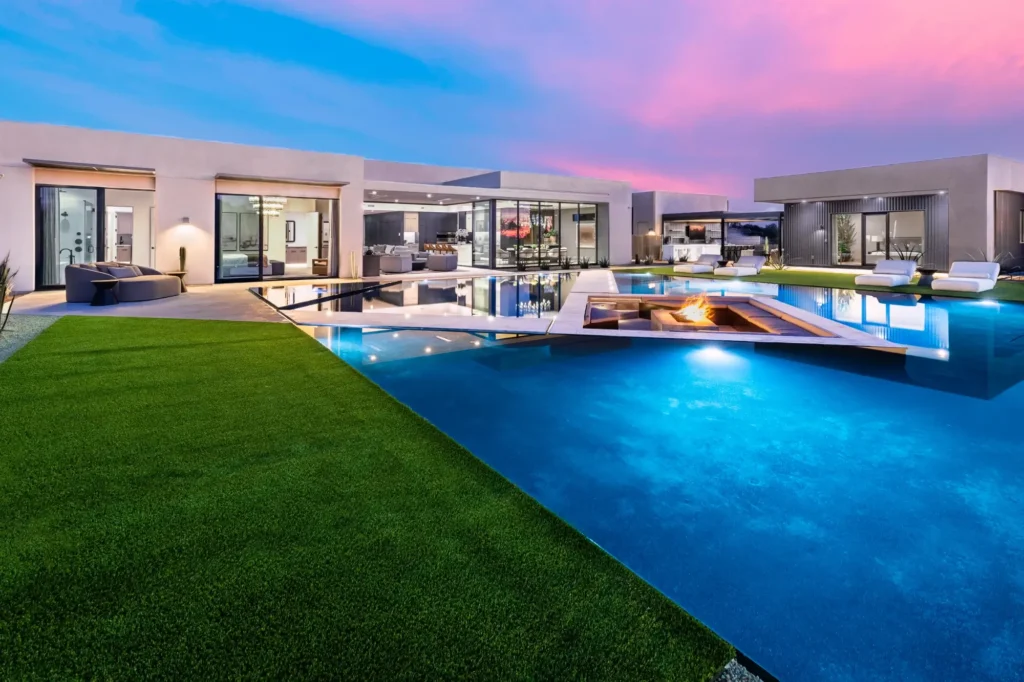
A reflecting pool with a linear fire element suspended above it, the flame mirrored in the still water below. A water wall with fire channels integrated at its base, flame and water occupying the same vertical plane. A sculptural fire-water tower, a freestanding installation where fire rises from a point above a cascading water element, combining vertical drama with the full sensory range of both elements.
These installations require more design and engineering investment than simpler configurations, but the return is proportional. A well-executed combined fire and water feature is the kind of element that defines a property. It’s what guests describe when they tell someone else about your backyard. It’s the photograph that gets shared.
Sensory Design Philosophy: Why This Matters Beyond Aesthetics
At Creative Environments, we approach fire and water features as components of a broader sensory design strategy, not simply as attractive amenities. The goal is to create outdoor environments that engage people fully, making the space feel alive and complete in a way that purely visual design cannot achieve.
Sound is the most undervalued dimension of outdoor space design. Most outdoor environments are designed entirely for visual effect, and the acoustic experience is left to chance. Wind, traffic, neighboring properties, and the ambient noise of the city fill in the silence in ways that are rarely flattering. Water features are the most effective tool available to a landscape designer for shaping the acoustic environment deliberately. The placement, scale, and flow rate of a water feature determine what the space sounds like, and therefore how it feels to be in it.
Light from fire sources is qualitatively different from artificial lighting in ways that matter after dark. Fire produces a warm, flickering light in the orange and amber spectrum that flatters faces, creates movement, and generates a quality of intimacy that LED lighting cannot replicate regardless of color temperature. A space that relies entirely on fixed artificial lighting after dark feels static. A space that incorporates fire feels alive.
Warmth, both literal and psychological, is the third dimension. Fire features are not just visual elements in Arizona’s outdoor season. From October through April, when evening temperatures drop into the fifties and forties, a well-positioned fire feature determines whether guests stay outdoors for another hour or retreat inside. This is one reason we consistently recommend fire features to clients who entertain regularly during the cooler half of the year, and one reason the outdoor season in Arizona is genuinely twelve months long for homeowners who design for it.
Planning Fire and Water Features: What to Consider
If you’re planning an outdoor space renovation or a new build and considering fire and water features, a few principles should guide the planning process.
Position for Gathering, Not Just Viewing
A fire feature that is beautiful from the kitchen window but awkwardly positioned relative to the seating areas is a missed opportunity. Fire and water features should be sited to draw people toward them, to create the natural gathering dynamic that makes an outdoor space feel like a destination rather than a passthrough.
Scale to the Space
A fire feature that is too small for its environment looks timid. One that is too large overwhelms it. Determining the right scale requires understanding the overall dimensions of the outdoor space, the sightlines from different vantage points, and the visual weight of the surrounding elements. This is one of the things that 3D design visualization does exceptionally well: it allows fire and water features to be evaluated at accurate scale before any construction commitment is made.
Integrate from the Beginning
Fire and water features that are designed into the master plan from the start, with utility lines, structural supports, and drainage systems run correctly the first time, are significantly better executed than those retrofitted into an existing space. Gas lines, water supply, and electrical for lighting and controls all need to be planned in relationship to each other and to the surrounding hardscape. When they are, the finished installation looks seamless. When they are not, the compromise is usually visible.
Design for Year-Round Use
Arizona’s climate rewards outdoor spaces that are designed to be comfortable across the full range of seasonal conditions. A fire feature positioned to provide warmth during cooler evenings, combined with a water feature that moderates the psychological temperature during warmer months, serves the space across every season.
For assistance and guidance planning your fire and water features, schedule your design consultation with Creative Environments today.
Arizona’s Outdoor Season and the Features That Extend It
One of the most compelling reasons to invest in fire and water features is specific to the Arizona context. The outdoor entertaining season here runs from October through April at its peak, with the transitional months of May, September, and early October also offering genuine outdoor comfort in the evening hours.
For homeowners who entertain regularly, this represents six to eight months of outdoor dining, gathering, and socializing under conditions that most of the country never experiences. A fire feature transforms a cool December evening into one of the most pleasant outdoor experiences of the year. A water feature, in the warmer shoulder months of the season, creates a backdrop that makes the space feel considered and complete even before the sun goes down.
Designing outdoor spaces that take full advantage of Arizona’s climate requires acknowledging the specific conditions of each season and designing features that address them. Fire and water features, together, cover the full range.
What Creative Environments Brings to This Work
Our portfolio of fire and water feature projects spans residential properties from modest lots to expansive estates, and commercial installations at resorts and hospitality properties across the Southwest. That range of experience produces a perspective on what works, what doesn’t, and what the difference looks like in person.
And our design process, from initial discovery through 3D visualization to construction and installation, ensures that fire and water features are integrated into your outdoor environment as architecture rather than placed within it as accessories. The difference is visible in every project we complete.
To begin the design process and learn more about the possibilities of your outdoor space, speak with our professionals today to book a consultation.
Creative Environments has served Arizona homeowners since 1950. With 65+ industry awards and an in-house design-build and fabrication team, we create outdoor environments that engage every sense. Serving Scottsdale, Paradise Valley, Tempe, Phoenix, and the greater Valley.