Are you looking for Arizona backyard ideas to elevate your outdoor space this summer? At Creative Environments, we believe that a strategic approach to design can lead the way toward endless summer days spent enjoying your personal retreat.
Phoenix averages 299 sunny days per year. Summer high temperatures routinely exceed 110°F. Ground surface temperatures on unshaded hardscape can climb past 160°F by mid-afternoon. These aren’t just weather statistics. They’re design parameters, and for homeowners across Scottsdale, Paradise Valley, and Tempe, they determine whether a luxury backyard gets used or gets avoided from June through September.
The good news: Arizona’s heat is entirely designable. The best spaces for summertime outdoor entertaining in the Phoenix metro don’t fight the climate. They’re engineered for it, with shade, airflow, and plant selection built into the architecture from the ground up. At Creative Environments, we’ve been designing heat-smart luxury backyards since 1950, and the strategies that separate a backyard you retreat from versus one you retreat to have never been more sophisticated, or more beautiful, than they are right now.
Here’s what heat-smart design looks like in 2026.
The Shift From Add-On Shade to Architectural Shade
For decades, Phoenix homeowners treated shade as a retrofit: an umbrella here, a sail shade there, a pergola kit bolted to the patio slab after the fact. That approach produces backyards that feel improvised and incomplete. It also underperforms. Freestanding shade structures cast fixed shadows, do nothing for radiant heat stored in surrounding hardscape, and rarely account for the specific sun angles and prevailing wind patterns of an individual property.
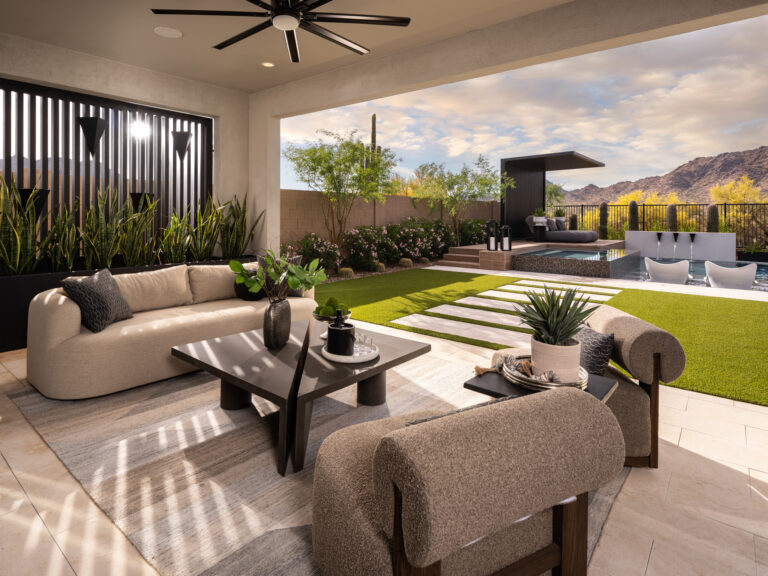
The defining shift in 2026 Arizona outdoor design is the move toward shade as architecture: shade structures conceived during the design phase, integrated with the home’s exterior language, and engineered to manage heat load across the entire outdoor environment, not just the spot directly beneath them. A bespoke example of architectural shade can be found within The Ambrosia.
This is the design philosophy behind bioclimatic pergolas, and it’s reshaping what’s possible in Phoenix luxury backyards.
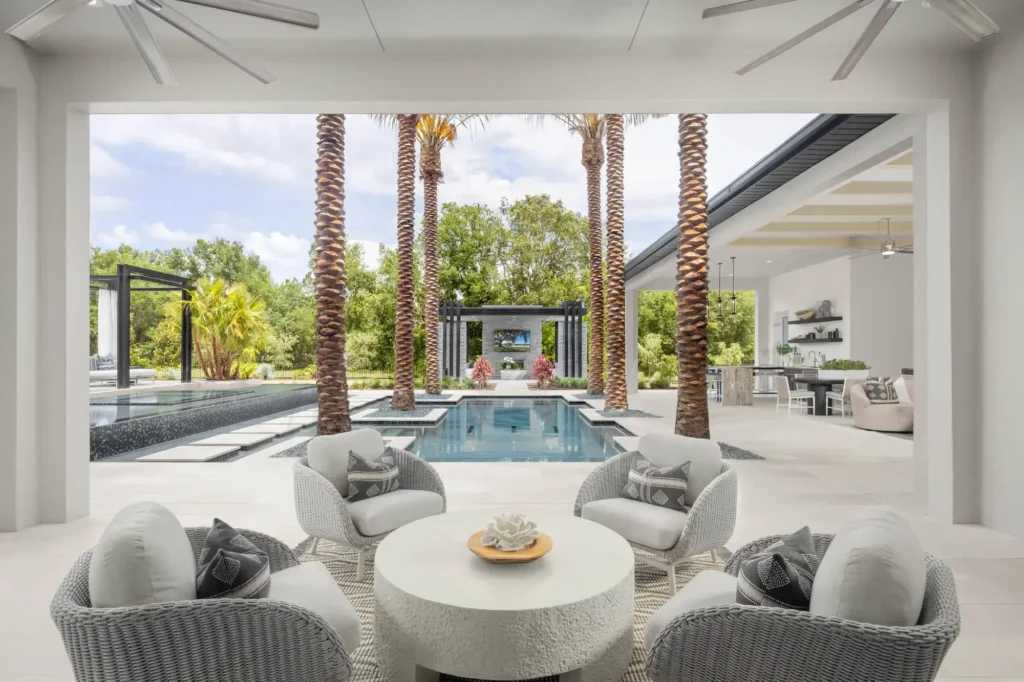
Bioclimatic Pergolas and Motorized Louvers: The Smart Shade Standard
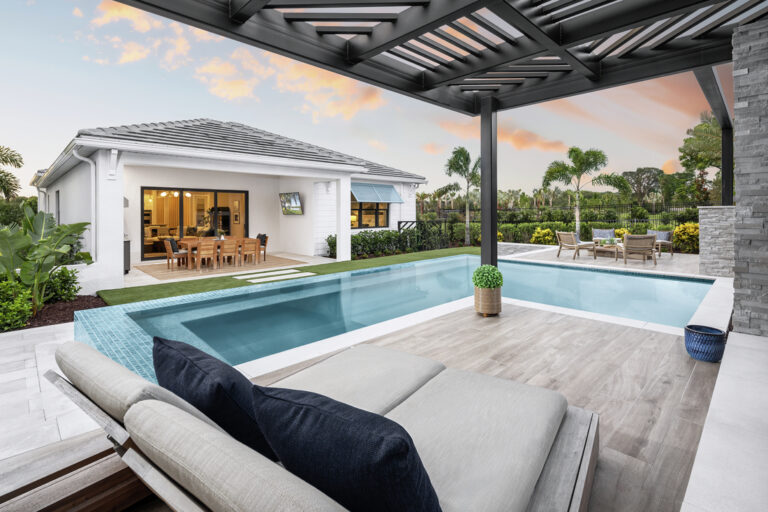
A bioclimatic pergola is a louvered shade structure with motorized, adjustable blades that rotate from fully open to fully closed, and every position in between. Unlike a fixed-roof pergola or a solid cabana, a bioclimatic system gives homeowners real-time control over sun exposure, ventilation, and weather protection.
In practical terms, this means the same structure can function as a sun-dappled al fresco dining room at 10 a.m., a fully shaded retreat at 2 p.m. when the sun is directly overhead, and an open stargazing terrace at 9 p.m. after temperatures drop. Many systems integrate with home automation platforms, allowing louver position, integrated LED lighting, misting lines, and motorized screens to be controlled from a single app.
What makes bioclimatic pergolas particularly well-suited to Arizona is their ability to manage airflow. Fixed roofs trap heat. Louvered systems, even when partially closed, allow rising hot air to escape while blocking direct radiation. That’s a critical distinction when ambient air temperatures are above 100°F.
Creative Environments designs and builds custom pergola and cabana structures as part of our Pergolas, Cabanas & Shade Structures service line. Every structure is designed as an architectural volume, matched in material, proportion, and detail to the home and landscape, rather than as a catalog product dropped into the yard.
Pool Placement and Shade Cycle Planning
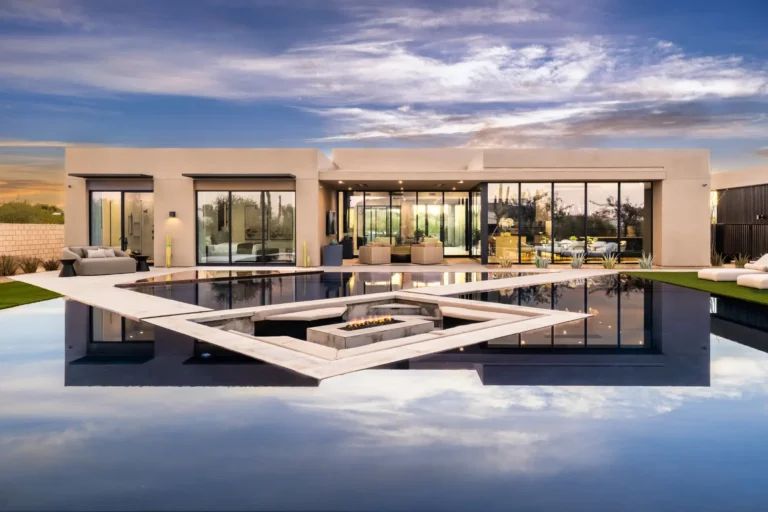
Most homeowners choose pool placement based on view, proximity to the house, or lot geometry. In Arizona, the best pool placements are also informed by the sun’s daily arc across the property, what designers call shade cycle planning.
The principle is straightforward: a pool that receives direct overhead sun from 11 a.m. to 4 p.m. (the peak heat hours) can become nearly unusable for families with young children, elderly guests, or anyone who hasn’t acclimated to extreme heat. Strategic positioning of shade structures, existing or planned trees, and even the pool’s own raised walls or water features can create naturally cooler microclimates around the water.
A few specific strategies Creative Environments applies to Arizona pool environments:
- East-facing pool orientations receive morning sun and natural shade in the afternoon as the house and adjacent structures cast long westward shadows. Morning use in summer is often the most pleasant and is easier to protect.
- Shade pavilions positioned on the west side of the pool block the afternoon sun directly and double as gathering spaces for adults while children swim. This single design decision can make a pool meaningfully more comfortable for afternoon use – even in July.
- Sun shelves and Baja steps with integrated umbrellas or overhead shade allow for shallow-water lounging in reduced UV exposure, a feature that’s particularly popular among families with toddlers and homeowners who want to socialize in the water without prolonged direct sun exposure.
- Raised spa placement on the west or south side of the pool can provide incidental shade over a portion of the pool surface during afternoon hours, while also serving as a visual anchor for the overall composition.
None of these decisions can be made in isolation. They require a site-specific sun study and an understanding of how the property’s microclimate shifts through the day and across seasons. That’s exactly the kind of analysis Creative Environments brings to every project design phase.
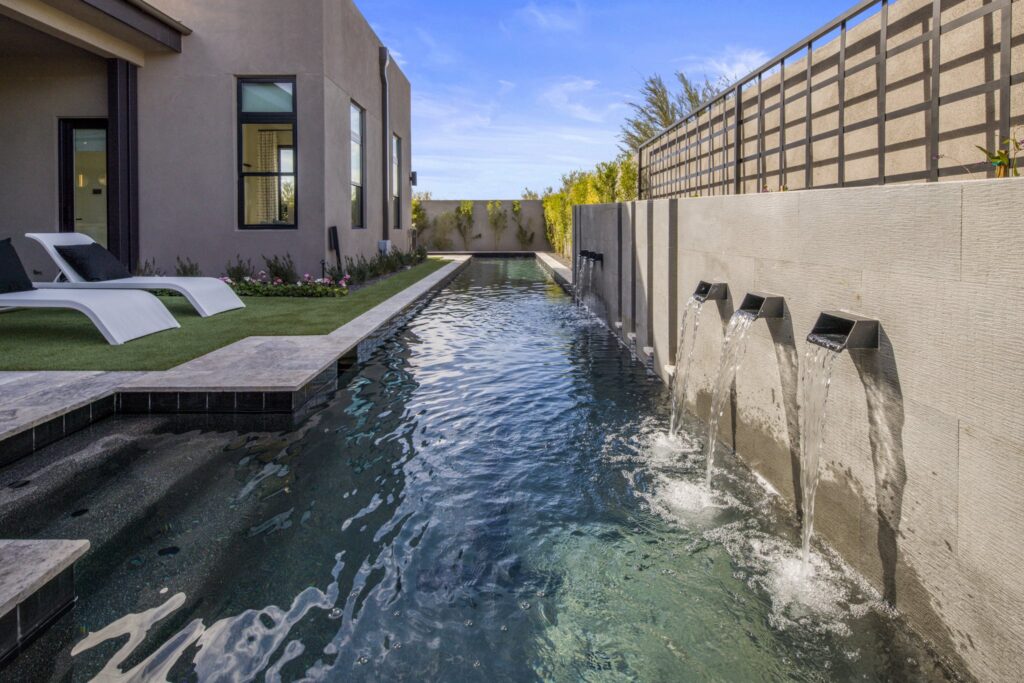
Misting Systems: Engineered Comfort, Not an Afterthought
A high-pressure misting system can lower ambient air temperature in an outdoor environment by 20 to 30°F. In Phoenix in July, that difference is the gap between an unusable space and a genuinely comfortable one.
But as with shade structures, the key is integration. Misting nozzles retrofitted to patio posts are functional. Misting lines concealed within pergola rafters, integrated into outdoor kitchen hoods, or embedded in landscape planting walls are both functional and invisible. The system becomes part of the space rather than a visible mechanical intrusion on it.
Modern high-pressure misting systems operating at 1,000 PSI or above produce a microfine mist that evaporates almost instantly in Arizona’s dry heat, which means surfaces and fabrics stay dry while the air cools. Lower-pressure residential systems can wet surfaces and furniture, which is why specification matters. For luxury outdoor environments, a commercial-grade high-pressure system with zoned control is the correct choice.
At Creative Environments, misting systems are specified and integrated during the design phase, with lines routed through structures and concealed within architectural elements. Zoning allows different areas (the dining area, the bar, the pool deck) to operate independently, so the system works where it’s needed without over-saturating areas where it isn’t.
Desert-Adapted Planting Palettes for a Luxury Aesthetic
One of the most powerful and most underused heat management tools in an Arizona backyard is the right planting palette. Mature trees and dense plantings can reduce ambient temperatures in their immediate vicinity by 10°F or more through a combination of shade and evapotranspiration. In a desert environment, strategic planting isn’t just landscaping. It’s climate infrastructure.
The challenge for luxury homeowners is finding plants that deliver meaningful shade, visual richness, and year-round interest without requiring the kind of water and maintenance that conflicts with both water-wise values and practical ownership.
Creative Environments’ planting philosophy for Phoenix metro properties centers on a few key categories, including canopy trees for natural shade, mid-layer texture and screening, ground-level texture and color, and shade-compatible understory.
Canopy trees for structural shade
Palo verde (Parkinsonia species) remains one of the finest shade trees for the Sonoran Desert, fast-growing, drought-tolerant, and beautiful in all seasons with a distinctive green trunk and spectacular spring bloom. Blue palo verde and desert museum palo verde are both excellent choices for residential properties. Ironwood (Olneya tesota) grows more slowly, but ultimately provides denser canopy and exceptional drought tolerance. Mesquite, both native velvet and Chilean varieties, provides graceful, filtered canopy ideal for placement near seating areas.
Mid-layer texture and screening
Desert willow (Chilopsis linearis), Texas sage (Leucophyllum species), and ocotillo (Fouquieria splendens) provide vertical interest, seasonal flowering, and informal screening without the water demand of traditional ornamental shrubs. These plants are extraordinarily beautiful and deeply misunderstood by homeowners who associate “desert landscaping” with gravel and cactus.
Ground-level texture and color
Red yucca (Hesperaloe parviflora), desert marigold (Baileya multiradiata), and blackfoot daisy (Melampodium leucanthum) offer color, texture, and pollinator value with minimal irrigation once established. Agave species ranging from the statuesque Agave americana to the compact Agave parryi anchor desert compositions with bold sculptural form.
Shade-compatible understory
Beneath canopy trees, shade-tolerant ground covers like Lantana montevidensis, trailing rosemary, and low-growing Ruellia species can create a layered, lush effect that reads as garden richness rather than desert minimalism.
The result of a thoughtful desert planting palette isn’t a sparse, rock-and-cactus landscape. It’s a layered, diverse, and genuinely beautiful garden that becomes more established and more cooling with every passing year.
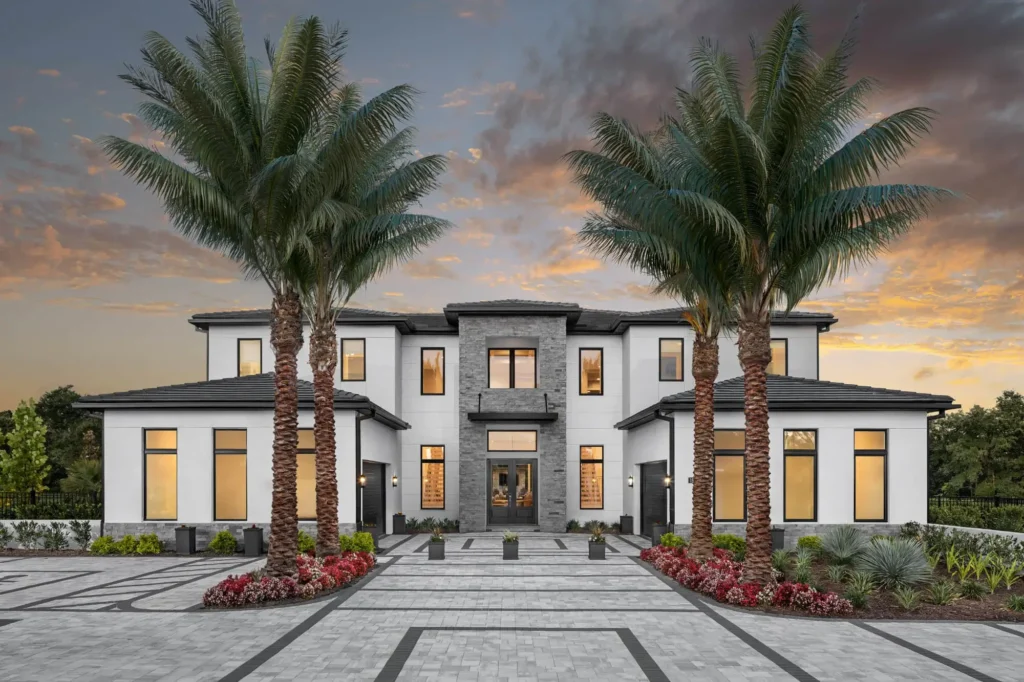
Hardscape Choices That Keep Heat at Ground Level
Hardscape material selection has a measurable impact on surface temperatures and radiant heat in an Arizona outdoor environment. Light-colored concrete and travertine reflect solar radiation rather than absorbing it, staying meaningfully cooler underfoot than dark pavers or exposed aggregate. On a 110°F day, this difference can be 30 to 40°F at the walking surface.
Travertine has been the material of choice for Phoenix pool decks for good reason. Its light color, natural texture, and porous surface keep it cooler than almost any alternative, and it doesn’t absorb heat as aggressively as denser stones. Large-format porcelain in light tones achieves similar thermal performance with greater design flexibility and virtually zero maintenance.
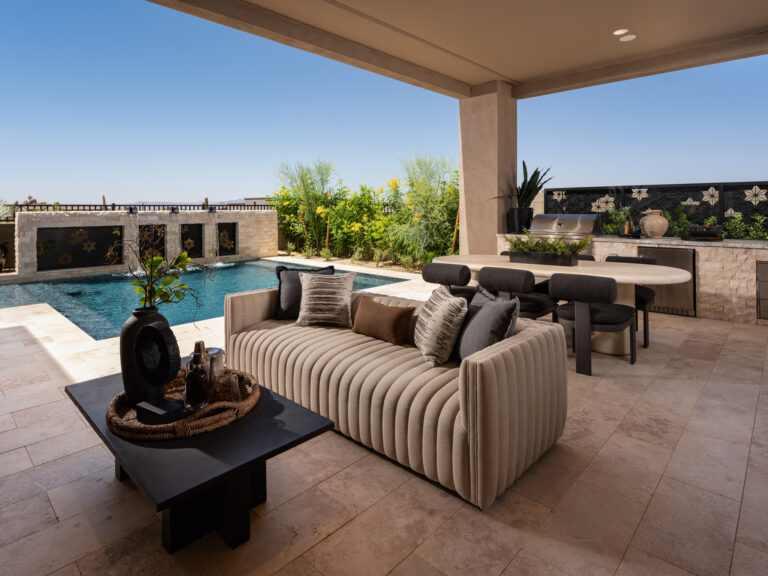
For covered areas beneath pergolas, within outdoor kitchens, and under pavilions, darker materials are more viable because they’re not in direct sun. This is where material transitions can add visual interest: a warm charcoal tile under the pergola giving way to light travertine at the pool deck edge, for example. The material shift reinforces the zone distinction while making practical thermal sense.
Creative Environments also designs hardscape layouts with strategic gaps for planting beds that introduce softness, seasonal color, and microclimate cooling between paving areas. A hardscape that’s 100% impervious surface holds and radiates heat; one thoughtfully interrupted with planting runs cooler and looks more considered.
Arizona Backyard Ideas for Blissful Summer Outdoor Entertaining
The Phoenix metro’s outdoor entertaining season doesn’t have to shrink to October through April. With the right combination of architectural shade, engineered cooling, strategic pool placement, desert-adapted planting, and thoughtful hardscape selection, a luxury backyard in Scottsdale, Tempe, or Paradise Valley can be genuinely comfortable and genuinely beautiful every month of the year.
That’s the promise of heat-smart design. Not a compromise with Arizona’s climate, but a collaboration with it.
At Creative Environments, every project we design is tested against the realities of where it lives. Before the first plan is drawn, we understand the sun angles, the prevailing winds, the soil, and the microclimate of your specific property. That site intelligence is what makes the difference between a backyard that looks good in photos and one that changes how you live.
Ready to design an outdoor space built for Arizona summers and outdoor entertaining? Connect with our team at Creative Environments for endless Arizona backyard ideas, built to withstand the summer heat.
Our award-winning design team is taking consultations now for fall installations, the ideal timeline for enjoying your new space by the holiday season.
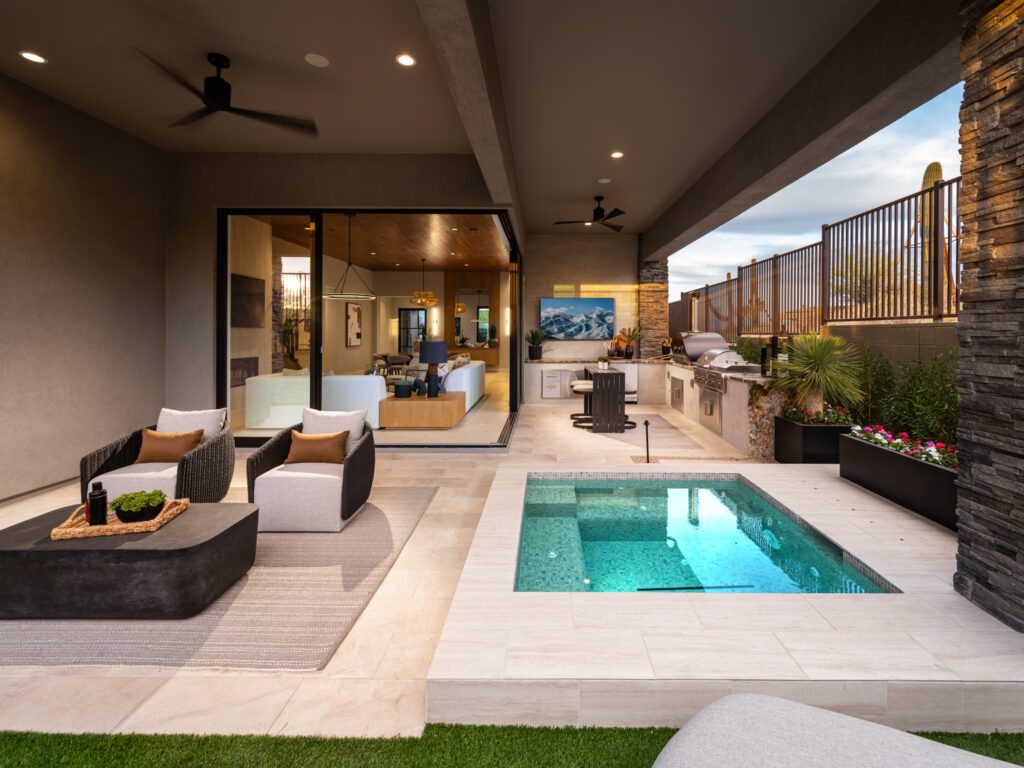
Creative Environments has been Arizona’s premier luxury outdoor design-build firm since 1950. Serving Tempe, Scottsdale, Paradise Valley, Phoenix, and the greater Phoenix metro area.